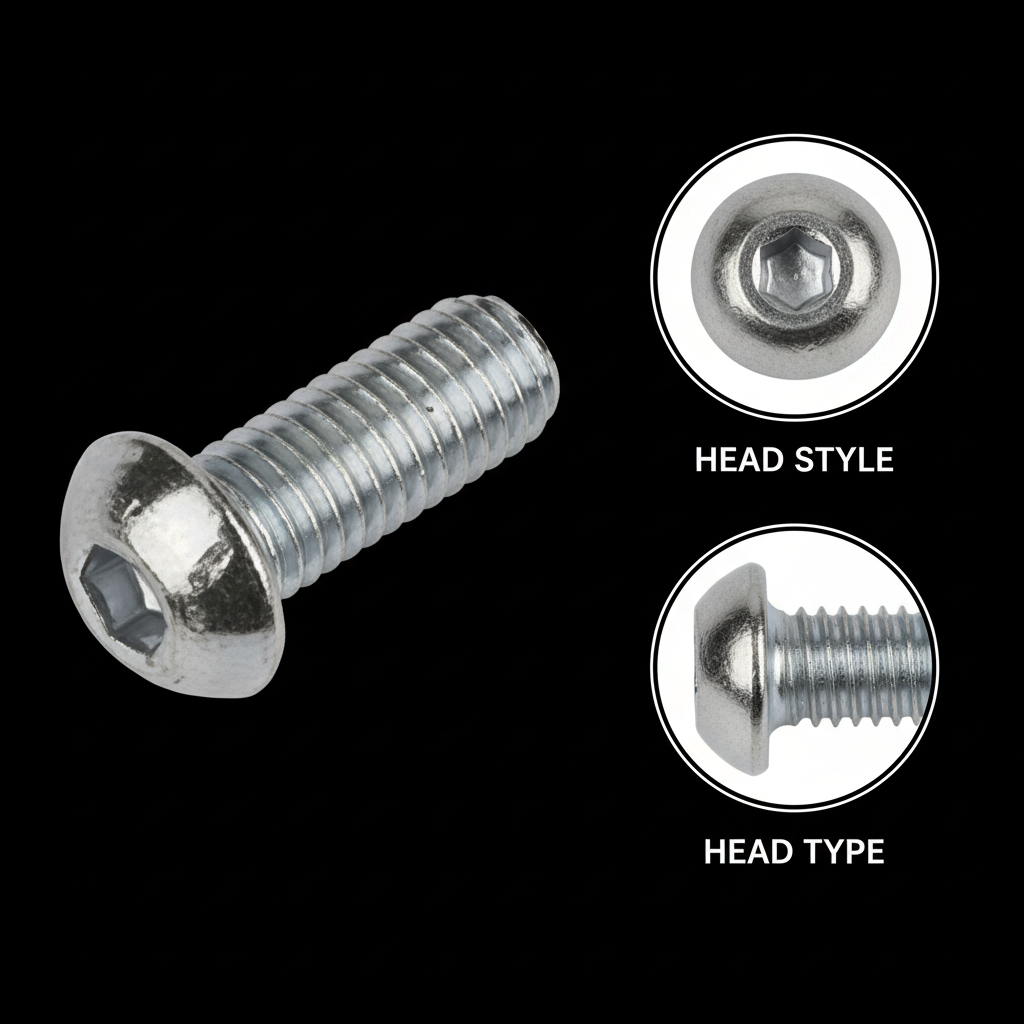
Button Head Screws — Uses, Sizes and Applications
Button Head Screws — Uses, Sizes and Applications
Button head screws are the fastener of choice when you need a strong, clean-looking screw that stays as low-profile as possible without sitting completely flush. Their rounded dome head and internal Allen drive make them a favourite in furniture, consumer electronics, automotive interiors, and precision machinery where appearance and accessibility both matter.
1. What Is a Button Head Screw?
Button head screws — formally called button head socket cap screws or BHCS — have a wide, low, dome-shaped head with an internal hexagonal (Allen) socket drive. The head diameter is typically larger than an equivalent standard socket head cap screw (SHCS), and the head height is much lower. This combination gives a wide bearing surface with minimum profile above the material. Button head screws are driven with a standard Allen key like any socket-drive fastener, but the low head height means the available socket depth is shallower — torque capacity is lower than a standard SHCS of the same diameter.
2. Button Head vs Standard Allen Screw
The key difference between button head screws and standard Allen (SHCS) screws is the head geometry. SHCS screws have a tall cylindrical head with a deep socket, allowing very high torque. Button head screws have a low, wide dome head with a shallower socket — they cannot be torqued as high, but they sit much lower and look far cleaner on the surface. For structural or high-preload joints, use SHCS. For assemblies where the fastener is visible and maximum torque isn't critical — furniture, panels, covers, decorative metalwork — button head screws are the better choice.
3. Common Sizes and Availability
Button head screws are most commonly used in metric sizes M3 through M10. M4 and M5 are the most popular for electronics and furniture. M6 and M8 are common in automotive and machinery panels. They are available in stainless steel SS304 (for outdoor, food-grade, and visible architectural applications), mild steel black oxide or zinc-plated (for machinery and furniture), and Grade 10.9 alloy steel (for higher-strength panel fastening). ScrewBazar stocks button head screws in M3 to M10 across stainless and zinc-plated finishes.
4. Typical Applications
Button head screws are used across a wide range of industries. In furniture manufacturing, they create a polished finish on visible joinery hardware — the dome head sits neatly against the surface without looking industrial. In consumer electronics, M3 and M4 button head screws fasten case panels and covers. In automotive interiors, they mount trim panels and interior components where appearance matters. In cycling and light motorsport, M5 and M6 button head screws are used on components where a clean aesthetic is part of the product appeal. Medical device and scientific instrument manufacturers use them in stainless steel for clean-room compatible assemblies.
5. Flange Button Head Variants
A flange button head screw adds an integrated washer flange under the dome head, increasing the bearing surface further without requiring a separate washer. This variant is particularly useful in soft materials (aluminium, plastic panels, wood) where a standard button head could pull through under load, and in high-vibration environments where the flange helps resist loosening. ScrewBazar supplies flange button head screws in M6 and M8 — contact our team for availability in other sizes or materials.
Shop Button Head Screws →
Shop Button Head Screws →
6. Torque Limits and Installation
Because the socket depth in button head screws is shallower than in SHCS screws, over-torquing will strip the socket before the fastener reaches its rated proof load. Always use the correct Allen key size — a worn key will round the socket at a fraction of the rated torque. For M4 button head screws in Grade 10.9, recommended torque is approximately 3.5 Nm. For M5, approximately 7 Nm. For M6, approximately 12 Nm. These are lower than SHCS values for the same size and grade. Thread-locking compound (Loctite 243 or equivalent) is recommended for button head screws in vibration-prone assemblies as a substitute for the higher clamping force achievable with SHCS.
7. Choosing Between Button Head and Other Screw Types
When deciding whether button head screws are right for your application: choose button head when appearance matters and torque requirements are moderate. Choose SHCS (standard Allen) when maximum clamping force or high preload is required. Choose Allen CSK when a completely flush surface is needed. Choose Pan Phillips when power-tool speed installation is more important than appearance. For most visible panel assemblies, covers, and furniture, button head screws hit the right balance of aesthetics, strength, and ease of installation that ScrewBazar customers consistently come back for.
Button Head Screws in Stock
ScrewBazar stocks button head screws in stainless steel SS304 and zinc-plated mild steel from M3 to M10. Competitive pricing, bulk discounts, and same-day dispatch available. Get in touch for specifications or to place your order.