Complete Guide to Drywall Screws — Types, Sizes and Uses
Complete Guide to Drywall Screws — Types, Sizes and Uses
Drywall screws are one of the most commonly used fasteners in construction — yet they are often misunderstood. Using the wrong thread, length, or point type leads to poor holding power, cracked drywall, and surfaces that won't stay flat. This drywall screws guide covers everything from coarse vs fine thread selection to the right depth setting for a professional finish.
1. What Makes Drywall Screws Different
Drywall screws have a bugle head — a slightly concave taper under the head that drives into drywall cleanly without tearing the paper facing. Unlike pan or CSK heads, the bugle head compresses the paper gently as it sinks slightly below the surface, creating a dimple that accepts joint compound. The sharp point enables them to penetrate gypsum board easily. They are available in black phosphate finish (standard for interior dry use), which also helps the joint compound adhere to the screw head. ScrewBazar supplies drywall screws in the standard sizes used across Indian construction and interior fit-out projects.
2. Coarse Thread vs Fine Thread
Drywall screws come in two thread types and the difference matters. Coarse thread (W-type) drywall screws have widely-spaced threads optimised for gripping timber framing — the coarse thread bites into wood fibres without binding and provides excellent withdrawal resistance. Fine thread (S-type) drywall screws have tightly-spaced threads designed for metal stud framing (light-gauge steel), where the finer thread cuts cleanly without stripping. Using coarse thread screws in metal studs will strip the hole; using fine thread in timber will not grip properly. Match your drywall screw thread type to the framing material.
3. Drywall Screw Sizes — Length Selection
Correct screw length depends on the drywall thickness and what is behind it. For 12mm (half-inch) drywall into timber: 38mm screws are the standard — penetrating 25mm into the stud. For 16mm drywall into timber: 45mm screws. For double-layer drywall: add both thicknesses and penetrate at least 20mm into the framing. The rule of thumb: screw length equals drywall thickness multiplied by three. Undersized screws will pull through the board; oversized screws waste penetration without additional benefit. For ceiling installation, a slightly longer screw (by 6-8mm) provides better holding against the weight of the board.
4. Point Types and Specialty Variants
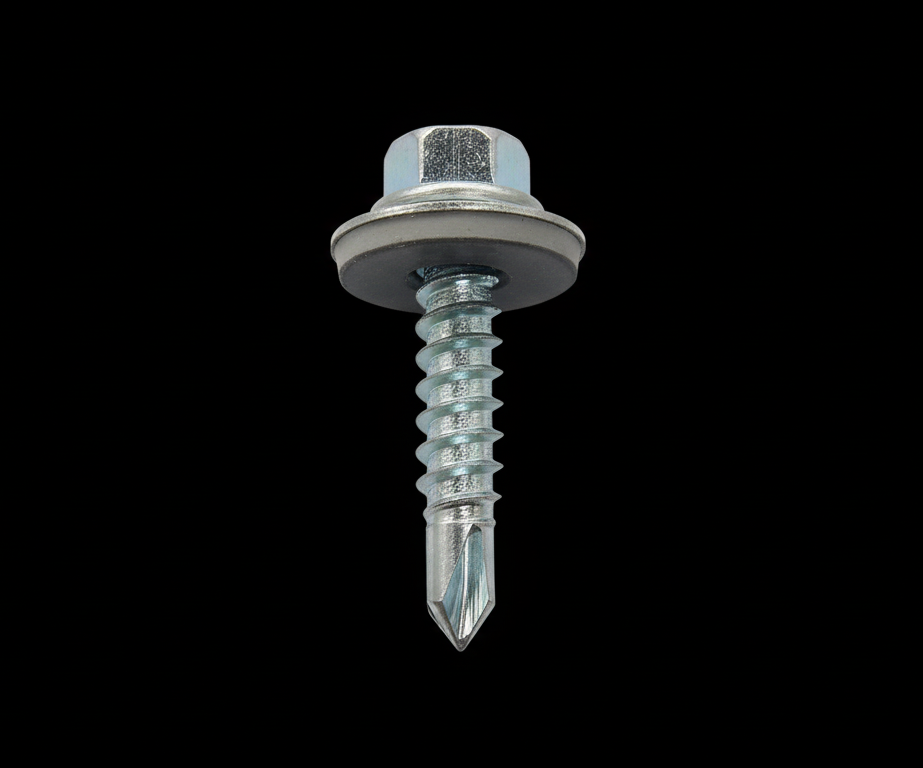
Standard drywall screws have a sharp drill point suitable for most gypsum-to-timber applications. Self-drilling drywall screws (type S) have a modified point that drills through metal studs without pre-drilling. Collated drywall screws are used with auto-feed screw guns for high-volume installation — they come in plastic-strip or paper-strip collations. Trim-head screws have a smaller head diameter for face-fixing trim and mouldings where the visible head must be minimised. These specialty variants are available from ScrewBazar for contractors handling diverse construction requirements.
5. Correct Installation Depth
The correct depth is the most important installation variable in drywall work. The screw head should sink just below the board surface — creating a slight dimple — without breaking the paper face. A broken paper face dramatically reduces the screw holding power and creates a telegraphing bulge in the finished surface. Use a variable-speed driver with a depth-limiting nose piece (drywall dimpler) set to the right depth. Drive speed matters: too fast and the screw punches through before the driver can stop; too slow and the driver tears the paper as it stalls.
Order in Bulk →
Order in Bulk →
6. Common Mistakes to Avoid
The most common drywall installation errors: over-driving the screw (breaking the paper face — results in a soft fixation that needs a new screw driven 50mm away); under-driving (head proud of surface — will not accept tape and compound cleanly); wrong thread type for the framing material (stripped holes or poor grip); screws too far from edges (minimum 12mm from cut edges, 25mm from factory edges); and using drywall screws for structural connections — they are designed for gypsum board, not load-bearing joints. For structural partition work, use appropriate structural bolts and nuts for the frame.
7. Quantities and Bulk Supply
Construction and interior fit-out projects consume drywall screws in large quantities. A typical 1000 sq ft interior fit-out requires 800-1200 drywall screws depending on stud spacing and board layout. For large projects, buying in bulk (boxes of 1000 or 5000) delivers significant cost savings and ensures batch consistency. ScrewBazar supplies drywall screws in bulk quantities to contractors, interior fit-out companies, and construction firms across India with competitive pricing and reliable delivery schedules.
Drywall Screws for Every Project Scale
Whether you need a pack for a small renovation or a bulk supply for a large construction project, ScrewBazar has coarse and fine thread drywall screws ready to ship. Contact our team for pricing, bulk discounts, and delivery to your project site.