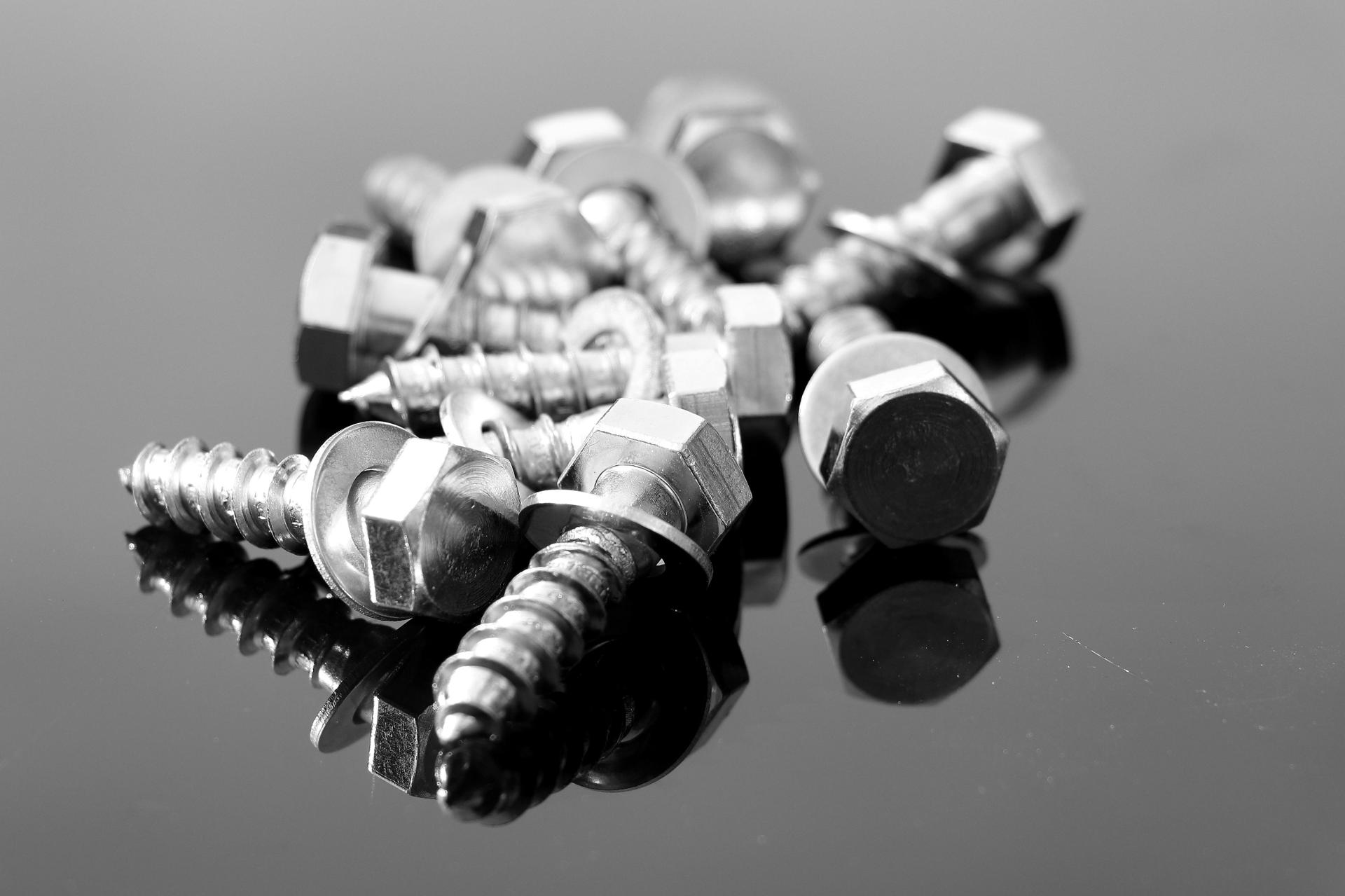
Fastener Materials Guide — SS304, SS316, MS, Brass and Nylon
Fastener Materials Guide — SS304, SS316, MS, Brass and Nylon
Every fastener is made from a material chosen for specific properties — strength, corrosion resistance, electrical conductivity, weight, or cost. Getting the material wrong is a common and costly mistake. This fastener materials guide explains the five main materials used for fasteners in India — SS304, SS316, mild steel, brass, and nylon — so you can specify with confidence.
1. Mild Steel (MS) — Strength at Low Cost
Mild steel is the most widely used fastener material globally. It offers good tensile strength (up to 1200 MPa in Grade 12.9), excellent machinability, and low cost. Raw mild steel corrodes readily in the presence of moisture, so MS fasteners are almost always supplied with a protective coating: zinc electroplating (the most common, providing 8-12 micron zinc coverage), hot-dip galvanising (45-85 microns, for structural outdoor use), black oxide (aesthetic, minimal corrosion protection), or phosphate (for painted assemblies). For indoor machinery, equipment, and sheltered structural connections, zinc-plated mild steel hex bolts, machine screws, and nuts are the standard specification at ScrewBazar.
2. SS304 — The General-Purpose Stainless Grade
SS304 stainless steel fasteners contain 18% chromium and 8% nickel. The chromium creates a self-healing passive oxide layer that provides corrosion resistance without any coating. SS304 is the most common stainless steel grade used in fasteners — suitable for outdoor architectural use, food processing, medical devices, chemical equipment (non-chloride), and any application where long-term corrosion resistance is required without the cost of SS316. SS304 is classified as A2 under ISO 3506 and delivers 700 MPa tensile strength in the standard grade. It is not the right choice for chloride-rich environments — salt spray, sea water, or bleach-cleaned equipment — where SS316 is required. Per this fastener materials guide, SS304 covers 80% of corrosion-resistant fastener applications.
3. SS316 — Marine and Chemical Grade Stainless
SS316 stainless steel fasteners add 2-3% molybdenum to the SS304 formula. This addition dramatically improves resistance to chloride pitting and crevice corrosion. SS316 (classified as A4 under ISO 3506) is the correct specification for: coastal and marine installations (within 1km of the sea), offshore structures, swimming pool equipment (chlorine exposure), pharmaceutical processing (frequent bleach cleaning), chemical plants handling acids and salt solutions, and food processing equipment in high-salt environments. SS316 costs 20-40% more than SS304 — specify it only where the chloride or aggressive chemical exposure genuinely demands it. ScrewBazar stocks SS316 screws and bolts in common metric sizes.
4. Brass — Non-Sparking, Non-Magnetic, Decorative
Brass fasteners are made from a copper-zinc alloy (typically 60-70% copper, 30-40% zinc). Brass offers good corrosion resistance (better than mild steel, slightly less than SS304 in most environments), excellent machinability, and unique functional properties: it is non-sparking (essential in explosive or flammable environments), non-magnetic (required in MRI rooms, laboratory instruments, and scientific equipment), and has good electrical conductivity. Brass fasteners also have a warm golden appearance that makes them popular for decorative and heritage applications. Common uses include electrical terminals, marine hardware (instrument grade), gas installations, antique restoration, and heritage building fixtures. Available at ScrewBazar in screws, bolts, nuts, and inserts.
5. Nylon — Corrosion-Proof, Insulating, Lightweight
Nylon fasteners (polyamide PA6 or PA66) are completely immune to rust and galvanic corrosion — they contain no metal. Key properties include excellent electrical insulation (prevents short circuits in electronic assemblies), chemical resistance to oils, fuels, and many solvents, low weight (approximately one-seventh the density of steel), and food-safe compliance. Nylon fasteners are standard in electronics (PCB standoffs, insulating screws near live conductors), chemical equipment (acid and alkali resistant), marine applications (secondary, non-structural connections), and automotive (weight reduction, corrosion-free interior components). They have lower mechanical strength than metal fasteners — maximum operating temperature of approximately 100-120°C — so they are not suitable for structural or high-temperature applications.
Get Material Recommendations →
Get Material Recommendations →
6. Quick Material Selection Reference
This fastener materials guide summary: choose mild steel zinc-plated for indoor machinery and general construction. Choose SS304 for outdoor, food-grade, and architectural applications. Choose SS316 for marine, coastal, and chemical plant environments. Choose brass for non-sparking, non-magnetic, or decorative applications. Choose nylon for electrical insulation, chemical resistance, or weight-sensitive applications. For high-strength requirements (Grade 10.9/12.9), specify high-tensile alloy steel in mild steel base — stainless steel in these grades is available but expensive and requires careful specification.
7. Mixed Material Assemblies
When different metals contact each other in the presence of moisture, galvanic corrosion can occur — the less noble metal corrodes preferentially. Common problem pairings to avoid: mild steel bolts in aluminium structure (aluminium corrodes), copper fittings with steel fasteners (steel corrodes), and carbon fibre composites with steel fasteners (steel corrodes aggressively). To prevent galvanic corrosion in mixed-material assemblies, use stainless steel fasteners as a galvanically neutral choice, or use nylon or plastic isolating washers to break the electrical circuit between dissimilar metals. ScrewBazar can advise on galvanic compatibility for specific material pairings in your assembly.
Every Material, One Supplier
ScrewBazar stocks fasteners in mild steel, SS304, SS316, brass, and nylon across screws, bolts, nuts, washers, and anchors. Use this fastener materials guide as your starting point, then contact our team for application-specific recommendations, certifications, and bulk pricing.