Hex Nut vs Nyloc Nut — Which One Should You Use?
Hex Nut vs Nyloc Nut — Which One Should You Use?
Hex nuts and nyloc nuts are both widely used to secure bolts and screws, but they perform very differently under vibration, temperature changes, and repeated assembly. Choosing between a hex nut vs nyloc nut isn't just about what fits — it's about which will stay tight over the life of your assembly.
1. What Is a Hex Nut?
Hex nuts are the standard six-sided threaded fastener used across virtually every industry. They rely on friction between the mating threads and a clamping force generated during tightening to stay in place. A plain hex nut does not have any built-in locking mechanism — it relies entirely on correct torque and, where needed, a separate locking device like a spring washer or thread-locking compound. Hex nuts are available in mild steel zinc-plated, stainless steel SS304, brass, and nylon at ScrewBazar in all standard metric sizes.
2. What Is a Nyloc Nut?
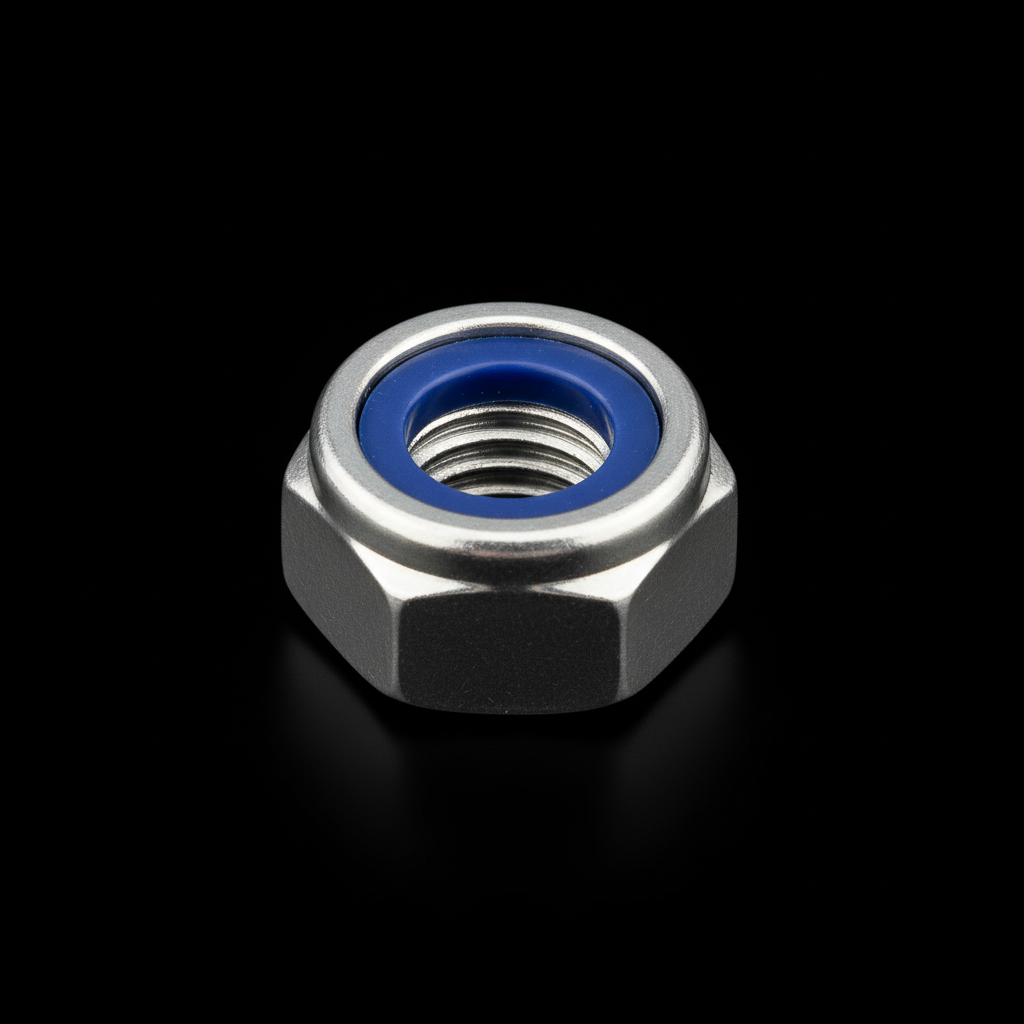
Nyloc nuts (also called nylon insert lock nuts) have a standard hex body with a nylon collar embedded in the top. When the bolt is driven through the nylon collar, the nylon deforms around the thread and creates a prevailing torque that resists loosening. This locking action works independently of bolt tension — the nyloc nut resists vibration even if the joint loses some clamp load. Nyloc nuts are one-use fasteners by design; the nylon insert loses its locking effectiveness after a few removal and refit cycles.
3. Vibration Resistance
This is where hex nut vs nyloc nut performance diverges most clearly. A plain hex nut under vibration will gradually lose the friction that holds it in place. Without a spring washer or thread-lock applied, it can work loose. A nyloc nut maintains its prevailing torque regardless of the bolt tension state — the nylon insert keeps the nut from spinning back even as vibration tries to unwind it. For any assembly subject to regular vibration — machinery, automotive suspensions, pumps, compressors — a nyloc nut is the safer choice.
4. Temperature Limits
The nylon insert in a nyloc nut has a temperature limit. Standard nyloc nuts should not be used above 120°C — the nylon softens and loses its locking function. For high-temperature applications (exhaust systems, engine bays, industrial ovens), a metal lock nut (all-metal prevailing torque nut) or a plain hex nut with a thread-locking compound rated for high temperature is required. Hex nuts have no such temperature limitation in themselves — their material grade determines the temperature limit, and stainless steel hex nuts are suitable for several hundred degrees Celsius.
5. Reusability and Cost
Plain hex nuts can be removed and reused many times — they're the standard choice wherever joints need to be disassembled regularly (maintenance panels, service access covers, adjustable assemblies). Nyloc nuts should be replaced every time they're removed; reusing a nyloc nut risks relying on a compromised locking insert. In high-volume assemblies this reusability difference can affect lifecycle cost. For permanent or semi-permanent connections where vibration is a concern, the nyloc nut's slightly higher unit cost and single-use nature is easily justified by the reliability it provides.
Shop Nuts →
Shop Nuts →
6. When to Use Each
Use a hex nut when: the joint is non-vibrating, joints are regularly disassembled, a separate locking device (spring washer, thread-lock) will be used, or operating temperature exceeds 120°C. Use a nyloc nut when: the assembly is subject to vibration, the joint is semi-permanent (infrequent disassembly), operating temperature stays below 120°C, and you want self-locking without separate accessories. ScrewBazar stocks both hex nuts and nyloc nuts in stainless steel SS304, zinc-plated mild steel, and brass.
7. Flange Variants
Both nut types have flange variants worth considering. Flange hex nuts include an integrated washer surface that distributes load and reduces surface damage — useful when tightening into softer substrates. Flange nyloc nuts combine the load distribution of a flange with the vibration resistance of the nyloc insert, making them popular in automotive and machinery applications. Ask ScrewBazar about availability when placing your order.
Both In Stock, Ready to Ship
ScrewBazar supplies hex nuts and nyloc nuts in all standard metric sizes in stainless steel, zinc-plated, and brass. Whether you need a small bag or a bulk pallet, contact our team for pricing, specifications, and fast dispatch across India.