Pan Head vs CSK Head Screws — Key Differences and When to Use Each
Pan Head vs CSK Head Screws — Key Differences and When to Use Each
Pan head vs CSK head screws is one of the most common questions when selecting machine screws for a new assembly. Both are widely used in electronics, metalwork, and furniture — but they sit on the surface very differently and serve different purposes. Choosing the wrong head style causes aesthetic problems, assembly interference, and in some cases, structural weakness.
1. Pan Head Screws: Profile and Characteristics
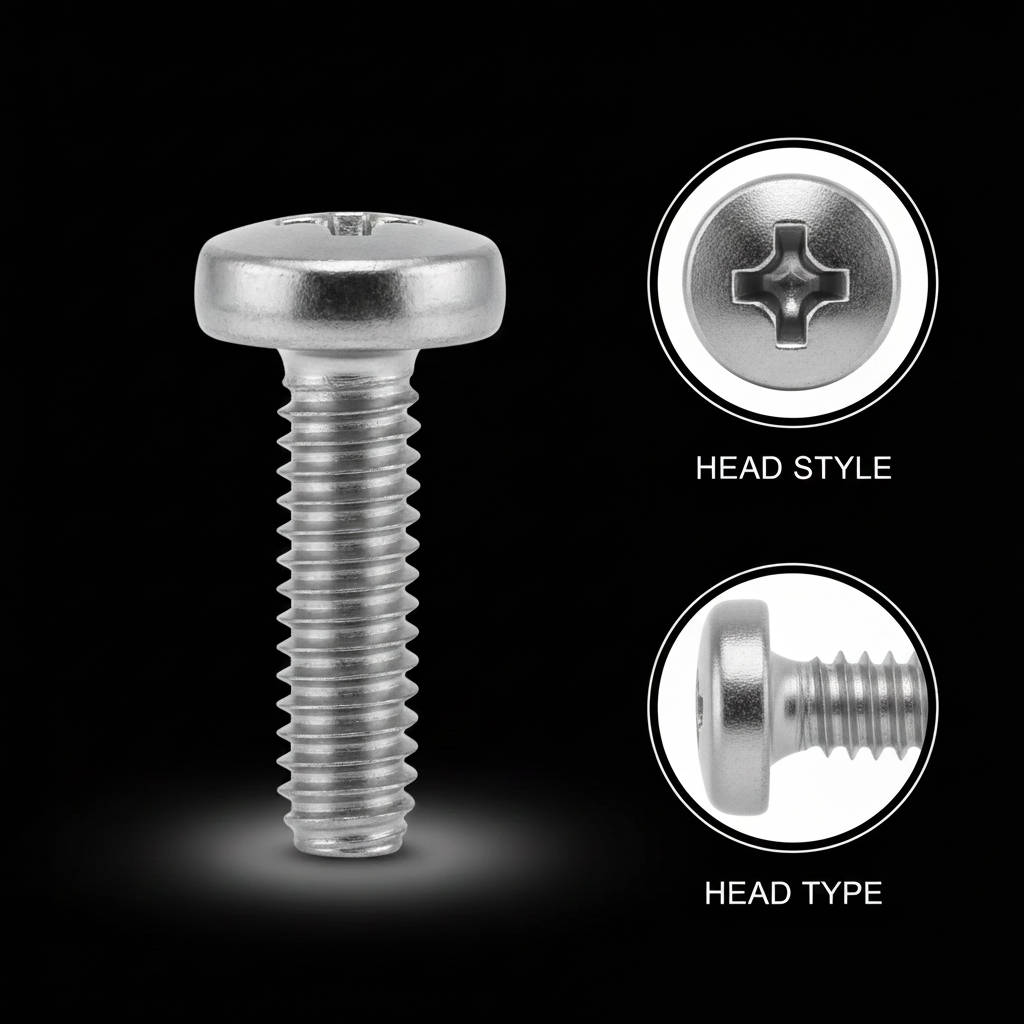
Pan head screws have a flat top with slightly rounded outer edges and a flat or slightly concave underside that sits flush against the workpiece surface. The head diameter is about twice the nominal screw diameter, providing a good bearing surface. Pan heads are the most common machine screw head type globally. They sit above the surface of the material — the full head height is visible once installed. Pan head screws are available with Phillips, Allen, Torx, and slotted drives. In Phillips drive, they are the standard for electronics assembly, domestic appliances, and light sheet metal.
2. CSK Head Screws: Profile and Characteristics
CSK (countersunk) head screws have a flat top and a conical underside that matches a countersunk hole in the workpiece. When installed correctly, the screw head sits flush with or slightly below the material surface — no head protrudes. The countersink angle for metric screws is typically 90°. CSK screws require either a pre-made countersunk hole (cast, pressed, or machined) or a countersunk hole drilled with a countersink bit before assembly. Without the matching countersink, CSK screws sit on the rim of the hole and do not clamp correctly.
3. Load Distribution Differences
This is the most practically important pan head vs CSK head difference for engineers. Pan head screws bear load on a flat annular surface under the head rim — load is distributed over a well-defined area without trying to pull the screw into the material. CSK head screws bear load on the tapered conical surface — which means they apply a radial (outward-splitting) force to the countersunk hole as well as axial clamping force. In brittle materials (glass fibre composites, ceramics, very thin aluminium sheet), this splitting force can cause cracking around the hole under load. In such materials, pan head with a washer is safer than CSK.
4. When to Use Pan Head Screws
Pan head screws are the right choice when: the screw head being visible above the surface is acceptable or irrelevant (internal assemblies, backs of panels, non-visible faces), when the material is soft or fragile and cannot accept the radial forces of a CSK head, when you need fast installation without pre-drilling countersinks, and when using power tools that benefit from the self-centering action of the pan head seating flat on the surface. The vast majority of machine screws in electronics assembly, PCB mounting, and general machinery are pan head Phillips or pan head Allen.
5. When to Use CSK Head Screws
CSK head screws are the right choice when: a flush surface is essential (door hinges, aircraft panels, architectural metalwork), the assembly has moving parts that would catch on a projecting head, the design brief specifies a clean, seamless appearance, or the material is thick enough to accept a proper countersink. For furniture hardware, CSK screws in wood create a clean finish that can be plugged or filled. For metal panels in automotive and aerospace applications, CSK screws are nearly universal.
Shop Machine Screws →
Shop Machine Screws →
6. Drive Type Considerations
Both pan head and CSK head screws are available with multiple drive types. Phillips drive is the most common for general assembly — self-centering, fast with power tools, but prone to cam-out at high torque. Allen drive provides higher torque without cam-out — preferred for metal-to-metal assemblies. Torx drive offers the best torque transfer and is standard in automotive applications. Slotted drive is available for heritage or decorative applications. When comparing pan head vs CSK head screws, the drive choice is independent and should be based on your torque requirement, tool access, and whether anti-tamper features are needed.
7. Material and Finish Options at ScrewBazar
ScrewBazar supplies both pan head and CSK head screws in stainless steel SS304, zinc-plated mild steel, and brass across Phillips, Allen, and Torx drive types. Machine screw sizes range from M2 to M12. For high-volume manufacturing requirements, contact our team for bulk pricing on either head style. Sample packs are available if you need to evaluate both options before committing to a production quantity.
Pan Head or CSK — We Have Both
ScrewBazar stocks pan head and CSK head screws across Phillips, Allen, and Torx drives in stainless and zinc-plated finishes. Browse the range online or contact our team for application-specific guidance and bulk pricing.