Self-Tapping Screws Guide: STS Pan Phillips, CSK, B Type & Torx
Self-Tapping Screws Guide: Types, Point Styles, Materials, and Applications
Self-tapping screws are among the most frequently misspecified fasteners in manufacturing. The variety of point types, head styles, drive configurations, and materials each serves a specific substrate and application — using the wrong combination results in stripped threads, material damage, or joints that work loose in service. This guide explains the technical distinctions between self-tapping and self-drilling, covers all major point types and head styles, and provides a practical substrate guide for selecting the right screw for sheet metal, plastic, wood, drywall, and steel applications.
1. Self-Tapping vs Self-Drilling: Understanding the Difference
Self-tapping and self-drilling are two distinct screw technologies frequently used as if they were interchangeable — they are not. A self-tapping screw (STS) has a sharp or blunt point and a thread form designed to cut or displace threads in a pre-drilled pilot hole. The screw taps its own thread as it is driven in, but it does not drill its own entry hole. Depending on material thickness and point sharpness, some self-tapping screws can pierce very thin sheet metal below 0.8mm without a pilot hole, but in most substrates a pilot hole is required first. A self-drilling screw (SDS, also called a TEK screw) has an integrated drill bit tip — a fluted point that bores through the material before the threads engage, combining drilling and thread-forming in a single operation with no separate drilling step. The practical decision rule: for thin sheet metal, plastics, wood, and pre-drilled holes in any material, use self-tapping screws. For sheet metal thicker than 0.9mm where you need to drill and fasten without pre-drilling, use a self-drilling screw with the correct TEK point rating for the metal thickness. Specifying a self-tapping screw where a self-drilling screw is needed — or vice versa — is one of the most common fastener specification errors in sheet metal fabrication and HVAC installation.
2. Point Types: AB, B, BT, and S
Point type determines how the screw interacts with the substrate at entry and whether it forms threads by material displacement or by cutting. AB point (sharp point, also called tapping point) has a sharp tapered tip that penetrates thin sheet metal and plastics cleanly, cutting threads by removing material. The wider thread spacing of the AB designation makes it well-suited for sheet metal up to approximately 1.2mm and for aluminium. B point (blunt point) has a slightly blunter tip with finer thread pitch. The finer pitch provides better thread engagement in thicker sheet metal and is the standard point type for plastic substrates because thread-forming — displacing material rather than cutting it — produces stronger threads in thermoplastics such as ABS, polycarbonate, nylon, and acetal. The displaced material around the formed thread grips the screw more tightly than cut threads, giving higher pull-out resistance in plastic. BT point combines the sharp piercing tip of the AB type with the finer thread form of the B type — offering quick starting in thin materials with improved thread engagement depth. Used where both penetration ease and holding strength matter. S point (Type S, spaced thread, sheetmetal point) has a very sharp piercing tip optimised specifically for thin gauge sheet metal in HVAC ductwork, electrical enclosures, and light fabrication. The coarse thread spacing resists vibration loosening in sheet metal panels and the sharp tip minimises burring on the exit face of the sheet.
3. Head Styles: Pan Head, CSK, Hex Washer Head, and Wafer Head
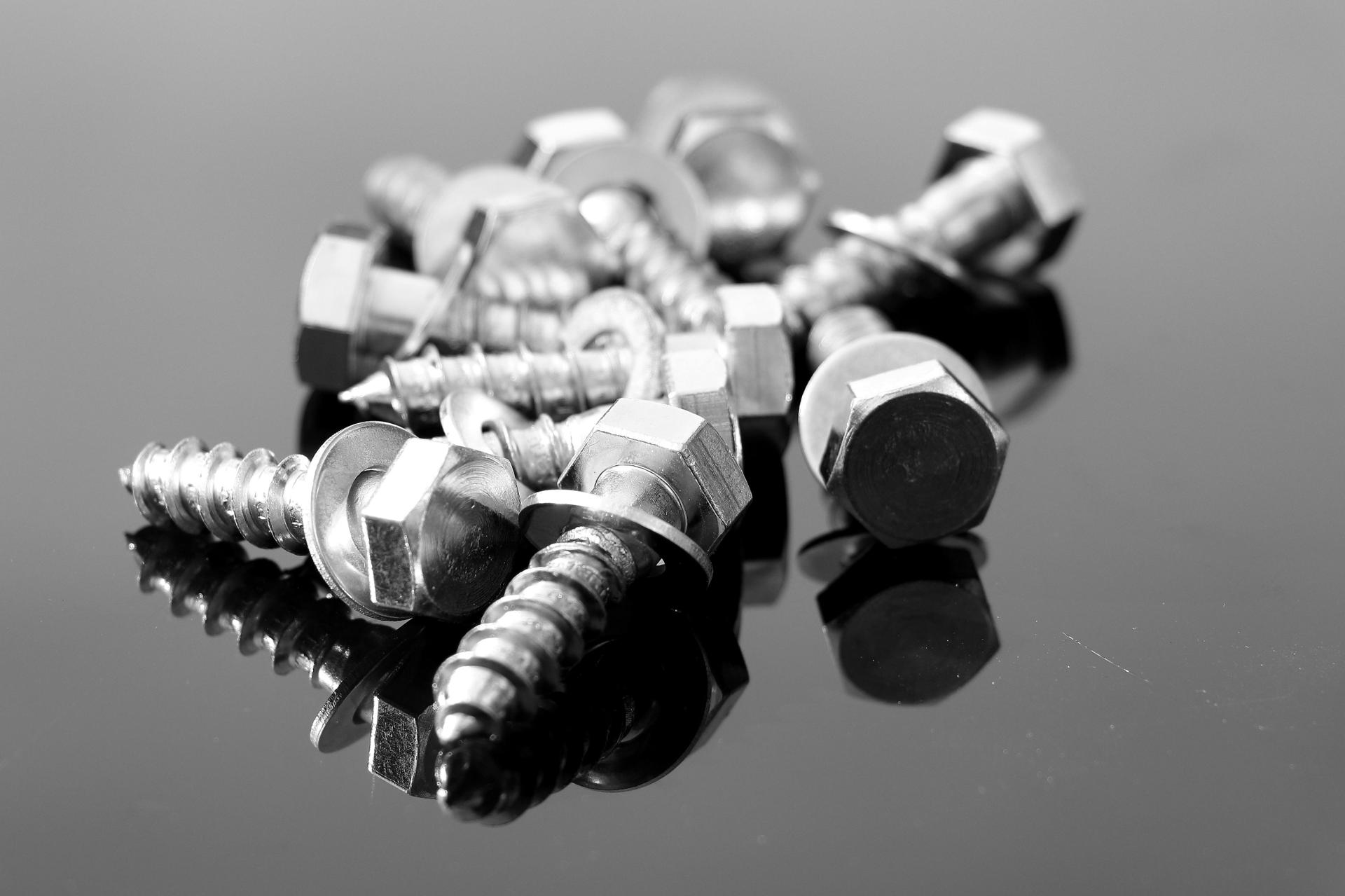
Pan head is the most versatile self-tapping screw head — a slightly domed top with flat bearing underside and medium head diameter providing good load distribution without excessive protrusion. The default choice for general sheet metal assembly, appliance manufacturing, electronics enclosures, and light fabrication where head appearance is not critical. CSK (Countersunk) head sits flush with the material when driven into a countersunk entry hole, producing a smooth surface without protruding fasteners. Used where a flush finish is required: door hinges, decorative metal panels, automotive body trim, furniture hardware, and sheet metal covers where protruding heads would snag or look unfinished. The countersink angle must match the screw head angle — typically 82° for self-tapping screws into sheet metal. Hex washer head (HWH) combines a hexagonal external head with an integrated EPDM or neoprene sealing washer bonded to the underside. The hex head allows high-torque installation with a nut driver or socket wrench, and the bonded rubber washer creates a weatherproof seal around the fastener entry point. The standard configuration for metal roofing, wall cladding, solar panel mounting rails, and any outdoor sheet metal assembly where the fastener penetration must be weather-sealed. Available in carbon steel with zinc or geomet coating and stainless steel SS304 for corrosive environments. Wafer head (modified truss head) has an extra-wide, very low-profile head providing maximum bearing surface in minimum height. Used for thin sheet metal, soft materials, and applications prone to pull-through where standard pan head provides insufficient bearing area — the wide head distributes clamping force over a larger contact zone and eliminates the need for a separate washer in many applications.
Browse Self-Tapping Screws →
Browse Self-Tapping Screws →
4. Drive Types: Phillips, Torx, and Hex
Phillips is the most common self-tapping screw drive in India — fast installation with power tools, self-centering on the recess, and widely available bits. The controlled cam-out prevents over-tightening in thin sheet metal, which is an advantage in applications where stripping the thread or dimpling the panel is a genuine risk. Phillips works effectively from Number 2 to Number 14 sizes in both hand and power tool installation. Torx (six-point star) drives transfer higher torque than Phillips without cam-out, with increasing use in solar panel installation, roofing, automotive trim, and HVAC ductwork where power tools are used throughout and bit replacement costs from stripped Phillips drives are significant. Torx self-tapping screws also retain drive engagement better when the bit or screw is slightly wet, oily, or contaminated — an advantage in outdoor construction. Hex drive self-tapping screws (primarily hex washer head configuration) accept nut drivers and socket bits. The hex head provides reliable seating control — you can feel the bonded washer compress to the correct point. Used for metal roofing, wall cladding, and structural sheet metal where the combination of high installation torque and weather sealing is required. Hex drive is the standard configuration for roofing screws across India's construction and industrial roofing sector.
5. Material Options: Carbon Steel, SS304, and SS316
Carbon steel zinc-plated self-tapping screws are the standard for indoor and semi-sheltered applications: HVAC ductwork, electrical enclosures, appliance manufacturing, furniture assembly, and general sheet metal fabrication. The zinc electroplating provides basic corrosion protection adequate for most indoor environments. Case-hardening is essential for self-tapping screws — the thread must be harder than the substrate to cut or form threads reliably, and the hardened case on carbon steel is what enables tapping into mild steel sheet. Stainless steel SS304 self-tapping screws are specified for outdoor and corrosive environments: exterior wall cladding, outdoor electrical enclosures, food processing equipment, and solar panel mounting where salt, humidity, and UV exposure would corrode carbon steel within months. Important limitation: SS304 is significantly softer than case-hardened carbon steel, so SS304 self-tapping screws work well in aluminium, thin mild steel, and plastics but may not reliably tap threads in harder or thicker steel substrates. SS316 self-tapping screws provide superior chloride resistance for coastal and marine construction, chemical plant cladding, and infrastructure in heavily polluted or salt-spray environments. Black phosphate or black oxide coating provides a dark matte finish with mild corrosion resistance — used in interior visible applications (furniture, retail display, dark-coloured enclosures) where zinc-plated appearance would be unsuitable.
6. Substrate Guide: Sheet Metal, Plastic, Wood, Drywall, and Steel
Sheet metal (mild steel, up to 1.5mm): AB or S point self-tapping screws with pan or CSK head. No pilot hole required for sheet below 0.8mm with a sharp-tip screw driven at the correct angle. For 0.8–1.5mm, pre-drill a pilot hole approximately 0.1–0.2mm smaller than the screw root diameter. Hardened carbon steel zinc-plated for indoor use; SS304 for outdoor or food applications. Plastics (ABS, polycarbonate, nylon, acetal): B or BT point self-tapping screws — thread-forming is preferred over thread-cutting in plastics because displaced material creates stronger grip than cut threads. Pre-drill a pilot hole equal to the screw root diameter. Use lower RPM than for metal to prevent heat build-up melting the thread. Wood and MDF: coarse-thread wood screws are the primary choice, but AB or S point self-tapping screws function in hardwood and MDF. Pre-drill in dense hardwoods to prevent splitting. Drywall into metal studs: fine-thread bugle-head self-tapping screws; coarse thread for timber studs. Self-tapping drywall screws tap through the drywall and into the stud without a pilot hole. Thin steel (1.5–3.0mm): B or BT point with pre-drilled pilot hole, or a self-drilling SDS screw with TEK-2 or TEK-3 point. Heavy steel (3.0–6.0mm): SDS screw with TEK-3 or TEK-4 point, or machine screws into tapped holes for maximum thread engagement. Aluminium sheet: AB or B type with a slightly oversized pilot hole compared to steel, to account for aluminium's tendency to gall. SS304 preferred to prevent galvanic corrosion between the fastener and aluminium panel.
7. Pilot Hole Requirements by Substrate and Screw Size
Correct pilot hole diameter is one of the most important factors in self-tapping screw performance. Too small and the screw stalls, the thread strips, or the material cracks. Too large and thread engagement is insufficient, reducing pull-out strength. General rule for metals: pilot hole diameter equals the screw root (minor) diameter. For plastics using thread-forming screws: pilot hole equals root diameter. For plastics using thread-cutting screws: pilot hole slightly larger than root diameter to reduce internal stress. Approximate pilot hole diameters for common sizes in 1.0mm mild steel sheet: Number 6 (3.5mm OD) — 2.7mm pilot; Number 8 (4.2mm OD) — 3.3mm pilot; Number 10 (4.8mm OD) — 3.9mm pilot; Number 12 (5.5mm OD) — 4.5mm pilot. In metric self-tapping sizes: M3.5 — 2.8mm pilot; M4 — 3.2mm pilot; M5 — 4.1mm pilot; M6 — 5.0mm pilot. Drill speed matters for thread quality: 500–1000 RPM for mild steel, 800–1500 RPM for aluminium, 1000–2500 RPM for plastics at the lower end of the range to prevent melting. Use cutting fluid or light machine oil when drilling pilot holes in steel — this improves thread quality and extends drill bit life. After drilling, deburr the pilot hole on both entry and exit faces before driving the screw; burrs on the entry face make starting the screw difficult, and burrs on the exit face damage the thread as it forms.
8. Industry Applications: HVAC, Solar, Cladding, and Sheet Metal Fabrication
HVAC installation and sheet metal ductwork fabrication is the largest-volume self-tapping screw application in India. Every duct joint, inspection hatch, and bracket attachment in a commercial HVAC installation uses S point or AB point self-tapping screws. Standard configuration is Number 8 (4.2mm) pan head Phillips or hex washer head, carbon steel zinc-plated for indoor ducts and SS304 for kitchen exhaust and outdoor-exposed ductwork. A typical large commercial building HVAC project consumes tens of thousands of pieces. Solar panel mounting systems — both rooftop and ground-mount — use hex washer head self-tapping screws in SS304 or geomet-coated carbon steel to attach mounting rails to building structure and to fasten module clamps to cross-rails. The combination of hex drive, EPDM bonded washer, and weather-resistant material is essential for 20-year outdoor service life. Metal wall cladding and roof sheeting installation uses hex washer head screws with colour-matched heads — available in a range of RAL colours with SS410 or carbon steel zinc-aluminium coating for matched appearance and long-term corrosion resistance. Automotive trim and body assembly uses CSK and pan head self-tapping screws for interior trim panels, engine bay covers, and underbody components. Sheet metal fabrication workshops across Peenya Industrial Area in Bangalore, and across major industrial estates in Pune, Chennai, and Ahmedabad, consume self-tapping screws at high volume for control panel manufacture, enclosure fabrication, and general sheet metal assembly. Contact ScrewBazar for the full range in the sizes, drives, and materials your application requires.
Shop Self-Tapping Screws →
Shop Self-Tapping Screws →
Choose the Right Self-Tapping Screw
Self-tapping screws are not interchangeable — point type, head style, drive, and material each determine whether the joint will hold. Match the point to the substrate, the head to the application, and the material to the environment. ScrewBazar stocks the complete range: pan head, CSK, hex washer head, and wafer head in Phillips, Torx, and hex drives, in carbon steel zinc-plated, SS304, and SS316, with bulk pricing and same-day dispatch for standard stock sizes.