Self Tapping vs Self Drilling Screws — Key Differences Explained
Self Tapping vs Self Drilling Screws — Key Differences Explained
Self tapping vs self drilling screws — these two terms are often confused, even by experienced tradespeople. Both screws can thread their own way into material without a pre-tapped hole, but their working mechanisms are completely different. Using the wrong type in an application causes stripped holes, failed joints, and wasted time. This guide explains what separates them and when to use each.
1. How Self-Tapping Screws Work
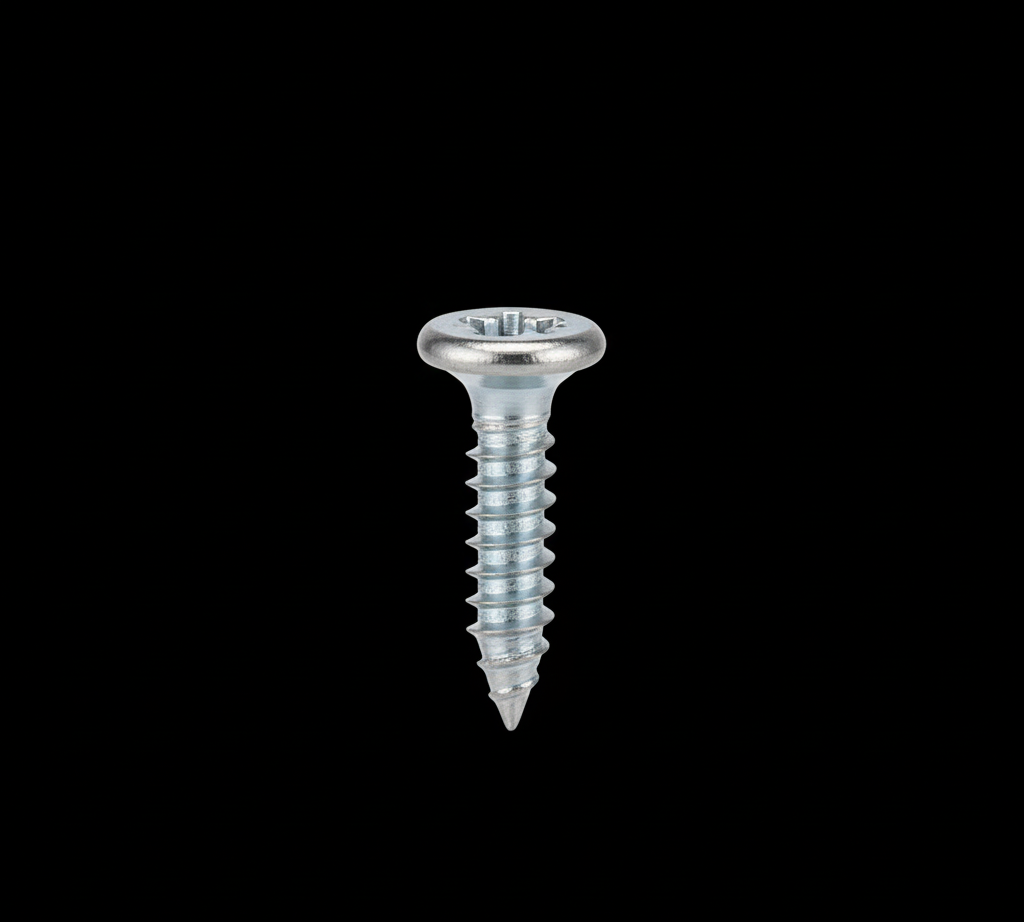
Self-tapping screws have a sharp threaded point that cuts or forms threads directly into the material as the screw is driven. They do not drill through material — they require a pilot hole (in metal and hard plastics) or can be driven directly into softer materials like thin sheet metal, wood-backed panels, or thermoplastics. The thread-forming or thread-cutting action creates a tight engagement in the material. Types include Thread-Forming (for soft metals and plastics, material displaced rather than removed) and Thread-Cutting (for harder materials, a small flute removes material like a tap).
2. How Self-Drilling Screws Work
Self-drilling screws — commonly called TEK screws — have a drill bit point at the tip. This point drills through metal first, then the thread immediately engages and fastens the material. No pilot hole is needed at all. The drill point is rated by number (TEK 1 through TEK 5), indicating the metal thickness it can penetrate. A TEK-2 point handles steel up to 3mm; a TEK-5 point can drill through 12mm structural steel. Self-drilling screws are the faster, more efficient choice whenever you are fastening metal to metal without pre-drilled holes.
3. The Core Difference: Drilling vs Threading
The self tapping vs self drilling distinction is simple once you know it: self-tapping screws can only thread — they cannot drill through hard materials without a pilot hole. Self-drilling screws can both drill and thread in one operation. If you drive a self-tapping screw into steel without a pilot hole, the point will wander, the screw will snap, or the thread will strip. If you use a self-drilling screw in thin plastic, the aggressive drill point will blow out the material. Match the screw type to the job.
4. Which to Use for Sheet Metal
For light gauge sheet metal (up to 3mm), self-drilling screws are the professional choice — faster installation with no pre-drilling required. For heavier steel sections (over 3mm), select the TEK point rating that matches the metal thickness. For thin sheet metal to wood backing (composite assemblies), self-tapping screws work well and provide a finer thread engagement. ScrewBazar stocks Hex SDS, PAN SDS, CSK SDS, and a complete range of self-tapping types including Pan Phillips, CSK, and Torx STS.
5. Which to Use for Plastics and Composites
For thermoplastics (ABS, polycarbonate, nylon), thread-forming self-tapping screws — specifically B-Type or AB-Type — are the right choice. They displace material to create threads without cracking the plastic. Self-drilling screws should never be used in plastics; the drill point creates heat and stress fractures. For composite boards (particle board, MDF), coarse-thread self-tapping screws provide better holding than self-drilling types. For fibre cement board and similar construction panels, use manufacturer-specified screws to avoid delamination.
Shop All Screws →
Shop All Screws →
6. Head Styles Available
Both self-tapping and self-drilling screws are available in multiple head styles. Self-tapping screws come in Pan Phillips, CSK Phillips, Wide Washer Pan, and Torx drives. Self-drilling (SDS/TEK) screws come in Hex (with EPDM washer for roofing), Pan, CSK, and Truss head styles. The head style choice depends on your application: Hex SDS for metal roofing (weather seal), Pan SDS for general metal assembly, CSK for flush-mount requirements. ScrewBazar supplies all variants with same-day dispatch.
7. Quick Decision Guide
Use self-tapping screws when: the material is plastic, soft metal, or you have an existing pilot hole. Use self-drilling screws when: you're fastening metal without pre-drilling, especially for roofing, cladding, steel framing, and HVAC ductwork. When in doubt about the self tapping vs self drilling choice for your specific material and thickness, reach out to ScrewBazar's technical team — we'll confirm the right specification before you order.
Get the Right Screw, First Time
ScrewBazar stocks the full range of self-tapping and self-drilling screws for every material and application. Contact our team with your material thickness, substrate, and environmental requirements — we'll specify the correct type, size, and coating to ensure a reliable joint every time.