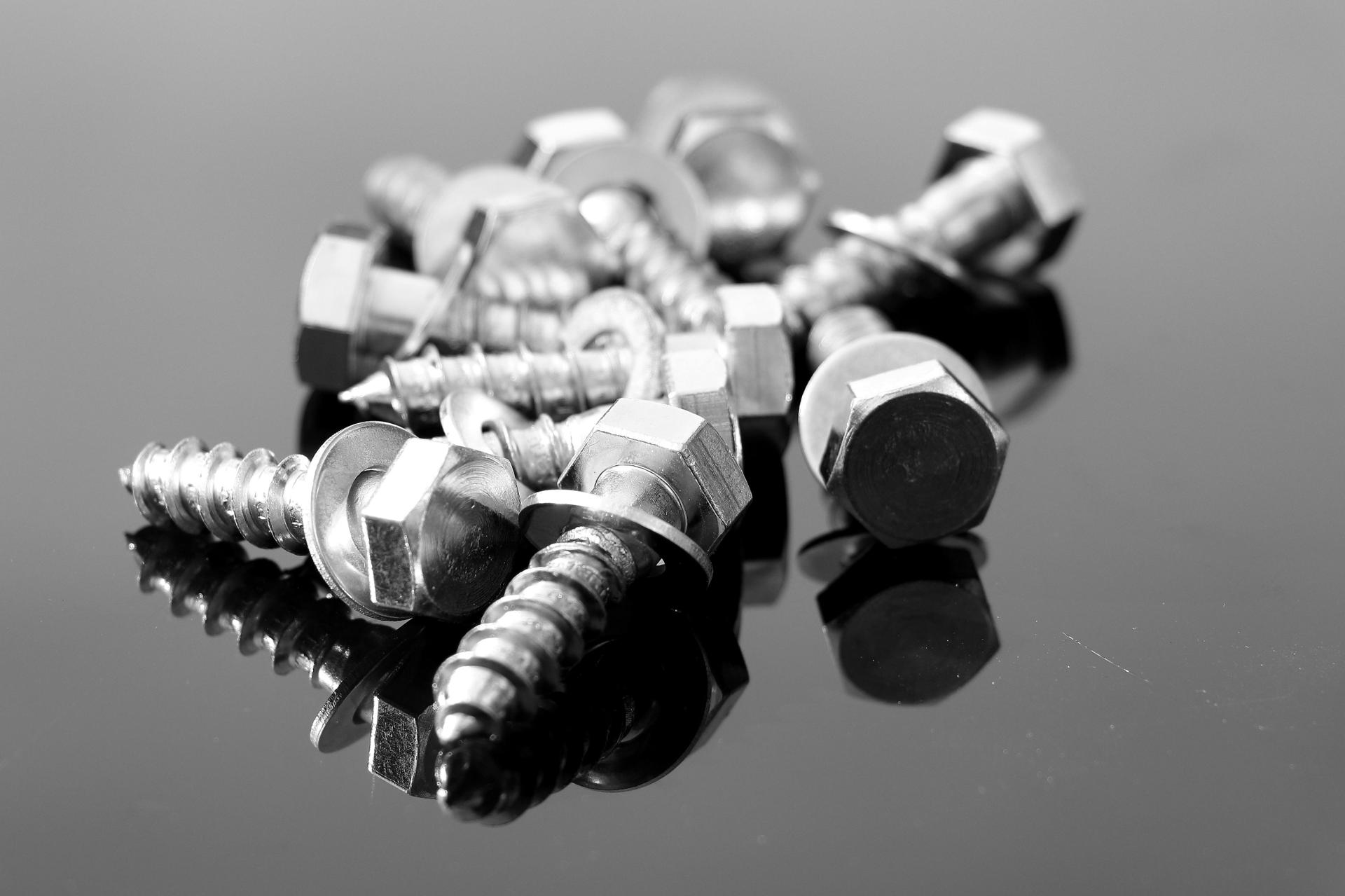
Stainless Steel vs MS Fasteners — Which is Better for Your Project?
Stainless Steel vs MS Fasteners — Which is Better for Your Project?
Stainless steel vs MS fasteners is the most common material selection debate in Indian construction and manufacturing. Mild steel (MS) fasteners cost less upfront; stainless steel costs more but lasts longer in harsh conditions. The right answer depends on your application, environment, and total cost of ownership — not just the price on the shelf.
1. What Are MS Fasteners?
Mild steel (MS) fasteners are made from low-carbon steel — typically with 0.15-0.30% carbon content — and are the most widely produced fasteners in the world. In their untreated state, mild steel fasteners will rust quickly when exposed to moisture. To address this, MS fasteners are almost always supplied with a protective surface finish: zinc electroplating (most common), hot-dip galvanising, black oxide, or phosphate coating. MS hex bolts, machine screws, and hex nuts in zinc-plated mild steel are the backbone of Indian manufacturing and construction, offering high strength at low cost.
2. What Are Stainless Steel Fasteners?
Stainless steel fasteners contain at least 10.5% chromium, which forms a self-repairing passive oxide layer on the surface that prevents corrosion without any additional coating. The most common grades for fasteners are SS304 (18% chromium, 8% nickel — general purpose) and SS316 (adding 2-3% molybdenum for marine and chemical resistance). Unlike MS fasteners, stainless steel fasteners require no surface treatment to resist corrosion — the corrosion resistance is inherent to the alloy. ScrewBazar stocks both SS304 and SS316 across screws, bolts, nuts, and washers.
3. Strength Comparison
In the stainless steel vs MS fasteners strength debate, high-tensile mild steel wins. Grade 8.8 MS bolts deliver 800 MPa tensile strength; Grade 10.9 delivers 1000 MPa; Grade 12.9 delivers 1200 MPa. Standard SS304 stainless fasteners (A2-70 class) deliver 700 MPa — comparable to Grade 8.8 MS. For most structural and mechanical applications, this is more than adequate. However, when maximum strength is the primary requirement (critical machinery, motorsport, structural connections in seismic zones), high-tensile MS fasteners hold the advantage. For moderate-strength applications combined with corrosion resistance, stainless steel is the superior choice.
4. Corrosion Resistance: Where Stainless Wins
This is the decisive factor for most projects choosing between stainless steel vs MS fasteners. Zinc-plated MS fasteners will eventually corrode when the zinc coating is scratched, worn, or depleted — typically within 2-5 years in exposed outdoor conditions. Hot-dip galvanised MS fasteners last longer (10-20 years in moderate environments) but still corrode eventually. Stainless steel SS304 fasteners resist rust indefinitely in most outdoor environments — no coating to wear off, no need for periodic replacement. For outdoor structures, rooftops, coastal installations, food processing equipment, and any application where corrosion means maintenance cost or safety risk, stainless steel delivers far better total value.
5. Cost Analysis: Upfront vs Lifetime
The upfront cost of stainless steel vs MS fasteners is typically 3-5x higher for stainless. For a large project this looks significant. But the lifetime cost calculation often reverses that conclusion. Replacing corroded fasteners in a structure requires scaffolding, labour, potential structural disruption, and new fasteners — often costing 20-50x the original fastener price when all costs are included. For outdoor structures, coastal buildings, food plants, and agricultural equipment, specifying stainless steel SS304 from the start is almost always the lower-cost decision over a 10-20 year asset life. ScrewBazar can help you model this comparison for your specific project.
Get a Comparative Quote →
Get a Comparative Quote →
6. When to Choose MS Fasteners
MS fasteners are the right choice when: the application is completely indoor and dry (zinc-plated MS is adequate), the joint is structural and requires Grade 10.9 or 12.9 strength not available in standard stainless, the project budget is tightly constrained and the operating environment is benign, the fasteners will be regularly replaced as part of maintenance anyway, or when hot-dip galvanised MS is specified for structural outdoor work (bridges, industrial structures, galvanised steel buildings). MS fasteners are reliable, strong, and cost-effective in the right context — they are not the wrong choice, just the right choice for specific applications.
7. Making the Decision for Your Project
The stainless steel vs MS fasteners decision simplifies to three questions: (1) What is the environment? — outdoor, coastal, wet, or chemical exposure points to stainless. (2) What strength grade is required? — Grade 10.9+ requirements point to high-tensile MS. (3) What is the acceptable maintenance frequency? — zero-maintenance outdoor installations require stainless. If you are uncertain, ScrewBazar's technical team can assess your project environment and recommend the most cost-effective specification. We supply both MS and stainless steel fasteners in all common metric sizes with same-day dispatch.
Both Materials, Expert Guidance
ScrewBazar stocks stainless steel SS304, SS316, and zinc-plated mild steel fasteners across the full range of screws, bolts, nuts, and washers. Tell us your application and environment and our team will recommend the right material at the best price for your project.