Complete Guide to Washers: Plain, Spring, Lock & Specialty Types
Complete Guide to Washers: Plain, Spring, Lock & Specialty Types
Washers are rarely specified with the same attention as bolts or nuts, but they are often the difference between a joint that performs and one that fails. The right washer prevents surface damage, distributes clamping load, maintains preload under vibration, provides sealing, or isolates electrical contact. With more than a dozen distinct washer types covering different load, vibration, material, and sealing requirements, selecting correctly requires understanding what each type actually does. This guide covers all major washer types — from standard plain washers to wedge-lock systems — with materials, standards, sizing rules, and industry applications.
1. Plain and Flat Washers: Sizes, Standards, and Load Distribution
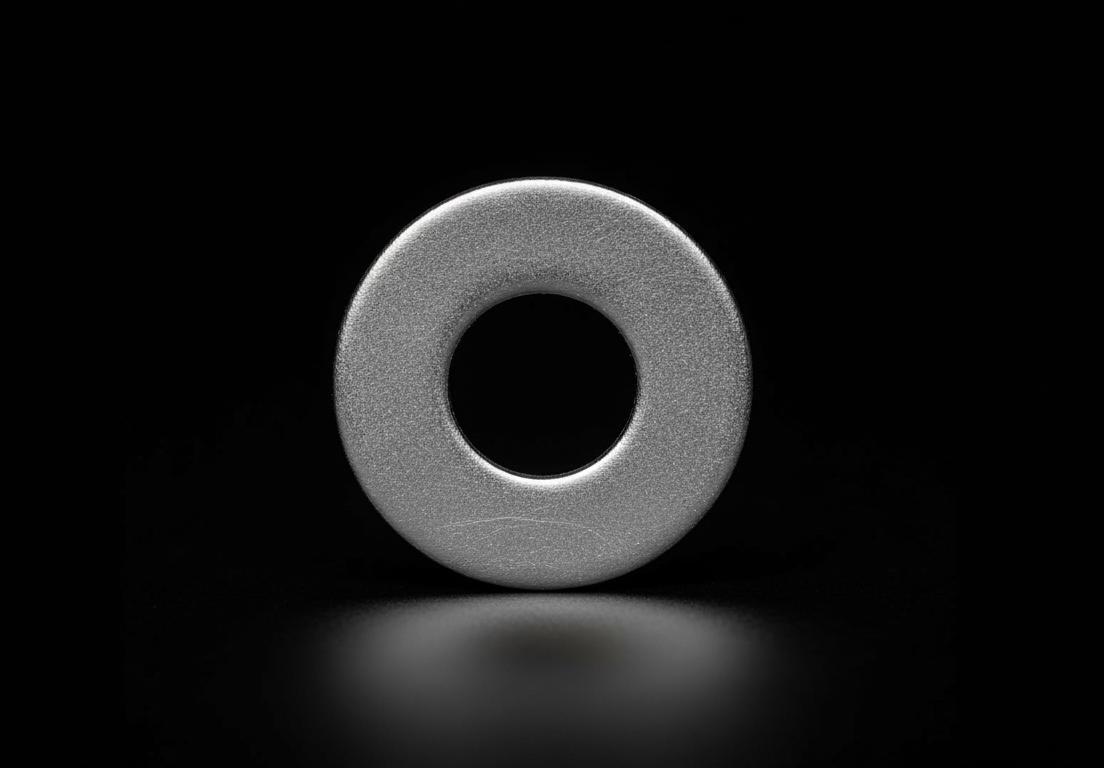
Plain washers (flat washers) are the most widely used washer type — a simple disc with a central hole, no spring function, and no special locking geometry. Their purpose is load distribution: spreading the clamping force of the bolt head or nut over a larger contact area, reducing stress concentration, and preventing embedding or surface damage to the mating material. This matters most in soft materials (aluminium, plastic, timber) and thin sheet metal where a bare bolt head would pull through or dent the surface. The standard governing plain washers is DIN 125 (Form A and Form B). Form A has an outer diameter approximately twice the inner diameter — suitable for most general fastening applications. Form B is chamfered, typically used with countersunk screws. DIN 9021 defines large-diameter washers with outer diameter approximately three times the inner diameter — significantly more bearing surface for soft materials, thin panels, and applications where pull-through is a genuine risk. DIN 7349 covers extra-thick plain washers for high-load joints. Standard sizing: for M6, DIN 125 OD is 12mm; DIN 9021 OD is 18mm. For M8, DIN 125 OD is 16mm; DIN 9021 OD is 24mm. Use DIN 125 as the default and upgrade to DIN 9021 when the substrate is soft, thin, or pull-through is a risk. Fibre washers and nylon plain washers serve the same load-distribution function with the additional benefit of electrical insulation and chemical resistance — used in electronics assemblies and chemical equipment wherever metal-to-metal contact at the fastener must be avoided.
Shop Plain Washers →
Shop Plain Washers →
2. Fender, Penny, and Wide OD Washers
Fender washers and penny washers are large-OD plain washers providing extra bearing area beyond DIN 125 and DIN 9021 specifications. Fender washers follow defined dimensional ratios; penny washers are a less precisely dimensioned term for the same concept. Both are specified when even the DIN 9021 washer provides insufficient bearing area — typically in timber construction where the washer must span a significant area around a lag bolt, in thin sheet metal and composite panel assembly where concentrated load causes pull-through, and in solar panel mounting where the washer distributes clamping load across an aluminium mounting rail without deforming it. Common metric fender washer outer diameters: M6 — approximately 40mm OD; M8 — approximately 50mm OD; M10 — approximately 60mm OD. These dimensions are not strictly standardised and vary by manufacturer — confirm with your supplier before designing to specific dimensions. Available in zinc-plated mild steel for general use, hot-dip galvanised for outdoor structural applications, and SS304 for food-grade or outdoor environments.
3. Spring, Wave, and Belleville Washers: Preload and Anti-Vibration
Spring washers (split lock washers, DIN 127) are the most widely used anti-vibration washer in general engineering. A split ring with offset ends creates spring tension when compressed, maintaining joint preload and resisting rotation through the split ends biting into both the fastener face and the mating surface. DIN 127 covers carbon steel spring washers in sizes M3 through M64. Spring washers are effective when installation torque is inconsistent or when minor vibration is present in general machinery, appliances, and fabricated assemblies. For extreme vibration or safety-critical joints, wedge-lock washers are the more reliable choice. Wave washers have a sinusoidal corrugation around the ring, providing axial spring force over a shorter installed height than a coil spring. Used for taking up thermal expansion clearance in assemblies, applying consistent preload in bearing housings, and reducing rattle in assemblies with tight tolerance stack-up. Less prone to damage than split lock washers. Belleville washers (conical disc washers, disc springs) are cone-shaped annular discs generating very high spring forces in a small axial travel. Used in high-load clamp connections, relief valves, safety mechanisms, and joints where a specific controlled preload must be maintained across a long service life. Load capacity and spring rate are calculated from disc diameter, thickness, and cone height — manufacturer engineering data is required for safety-critical applications. Stacking Belleville washers in parallel increases load capacity; stacking in series increases travel while maintaining load.
Browse Spring Washers →
Browse Spring Washers →
4. Lock Washers: Tooth, Star, Tab, and Wedge-Lock Types
External tooth washers (serrated washers) have teeth projecting radially outward from the outer edge. As the fastener is tightened, the teeth bite into both the fastener bearing face and the substrate, creating mechanical interlock that resists rotation. Particularly effective on softer metals and for maintaining electrical continuity in grounding connections. Internal tooth washers concentrate the locking action under the bolt head, with teeth pointing inward toward the centre hole — preferred in electronics and instrument assembly where surface damage beyond the bolt footprint must be avoided. Star washers (multi-tooth, external or internal) provide more bite points than simple tooth washers, distributing locking force more evenly — standard in automotive and appliance electrical grounding points. Tab washers are flat washers with one or more tabs that are physically bent over against the nut face after installation, mechanically locking the nut in position. Unlike friction-dependent lock washers, tab washers are positive-lock mechanical devices — they prevent rotation regardless of vibration level. Used in bearing lock nut assemblies and any safety-critical joint where loosening cannot be tolerated. Single-use: the tab must be replaced after each removal. Wedge-lock washers (Nord-Lock type) are the most effective anti-vibration washer system available. They work in pairs with inward-facing cam surfaces and outward-facing radial teeth. The cam angle is steeper than the thread pitch angle, meaning any loosening rotation causes the fastener to extend rather than unscrew — clamp load increases instead of decreasing. Effective under extreme vibration, reusable, and specified in wind turbines, railway applications, mining equipment, and any high-consequence joint where gradual loosening is unacceptable.
Shop Lock Washers →
Shop Lock Washers →
5. Specialist Washers: Fibre, Rubber, Nylon, and Taper
Fibre washers are made from compressed cellulose or synthetic fibre, providing soft sealing and electrical insulation. Used in hydraulic unions, fuel line connections, pipe fittings, and low-pressure plumbing where soft sealing is needed without high compression. Also used in electrical panels to isolate terminal connections from ground. Not suitable for high temperatures or aggressive chemicals. Rubber washers (EPDM, neoprene, silicone) provide compressible sealing under bolt heads. The standard configuration in metal roofing and wall cladding screws is a hex washer head with a bonded EPDM washer that creates a weatherproof seal around the fastener entry point as the screw is driven. EPDM resists UV and outdoor exposure; neoprene provides oil resistance; silicone handles temperatures up to 200°C. Nylon washers provide electrical insulation and chemical resistance in a dimensionally precise form. Used wherever metal-to-metal contact at the fastener must be broken — electronics PCB assemblies, battery terminals, sensor mounting, and chemical processing equipment where fibre would disintegrate in the process chemicals present. Taper washers are angled washers for use with I-beams and structural channels where the bolt must sit perpendicular to the applied load despite the angled flange of the structural section. Standard taper angles (5°, 8°, 14°) match the flange angles of standard structural steel sections. Critical in steel frame construction for beam-to-column connections and all bolted structural joints through angled sections.
6. Washer Materials: SS304, SS316, Brass, Nylon, and Galvanized Steel
Mild steel zinc-plated plain washers are suitable for indoor dry environments where corrosion is not a concern. The zinc electroplating provides basic oxidation protection and is the standard for general machinery, furniture, and indoor fabrication. SS304 washers are the standard upgrade for food processing, outdoor equipment, humid environments, and light marine applications. Chemical resistance covers most food acids and atmospheric conditions — the default choice where rust would be unacceptable or unsafe. SS316 adds molybdenum for significantly improved chloride resistance. Used in marine hardware, coastal structures, chemical plant, swimming pool fittings, and any application where SS304 would eventually pit and discolour. Brass washers are specified for electrical connections requiring conductivity, copper pipe plumbing for galvanic compatibility with copper fittings, and decorative visible fastening. Hot-dip galvanised (HDG) washers are used in structural steelwork and outdoor construction where the thick zinc coating provides long-term weather protection. HDG washers must be matched with HDG bolts and nuts — mixing galvanised and stainless steel creates galvanic activity that accelerates corrosion at the contact point. Nylon washers are fully non-conductive and non-corrodible, used in electronics assemblies, chemical equipment, and battery connections where a metal washer would create electrical or galvanic problems. PA66 grade with operating temperature to 120°C continuous.
7. Selecting the Right Washer: Size, Load, and Application Guide
The basic selection rule for plain washers: use the washer size matching your bolt diameter (M6 washer with M6 bolt), and upgrade from DIN 125 to DIN 9021 if the substrate is soft, thin, or prone to pull-through. For anti-vibration: use a spring washer (DIN 127) or tooth lock washer for general machinery and appliances where torque control may be inconsistent; use wedge-lock washers for high-consequence joints in heavy machinery, rail, and wind energy where loosening could be catastrophic. For sealing: use EPDM or neoprene bonded rubber washers under hex washer head roofing screws, and fibre or PTFE washers for hydraulic unions and pipe fittings. For electrical isolation: use nylon plain washers wherever metal-to-metal contact at the fastener point must be broken — in electronics, EV, and battery assemblies. Torque consideration: a hardened steel washer under the bolt head reduces friction and increases the clamp load achieved at a given torque — important in precision structural joints where specific preload is required. A nylon or brass washer under the bolt head cushions the surface but increases friction slightly, meaning a higher proportion of applied torque is consumed by friction rather than generating clamp load. Industry applications: Construction uses galvanised DIN 125 washers under all structural bolts and fender washers under timber lag bolts. Automotive uses spring washers on engine ancillary mountings and internal tooth washers for electrical grounding. Solar installation uses DIN 9021 or fender washers under every module clamp bolt to protect aluminium rails. HVAC uses fibre and rubber washers in refrigerant and condensate line connections. Electronics manufacturing uses nylon and fibre washers extensively for electrical isolation. ScrewBazar stocks plain, spring, lock, fender, fibre, rubber, and nylon washers across SS304, SS316, zinc-plated steel, and brass, with same-day dispatch from Bangalore-serving stock.
Get Bulk Pricing →
Get Bulk Pricing →
The Right Washer Makes a Difference
A washer is not an afterthought — it is a functional component that determines whether a joint survives vibration, prevents surface damage, seals against leaks, or isolates electrical contact. Specify the correct type, material, and size for your application. ScrewBazar stocks all major washer types across SS304, SS316, zinc-plated steel, nylon, and brass, with same-day dispatch for standard sizes and bulk pricing for production requirements.