Blind Rivet (Pop Rivet)
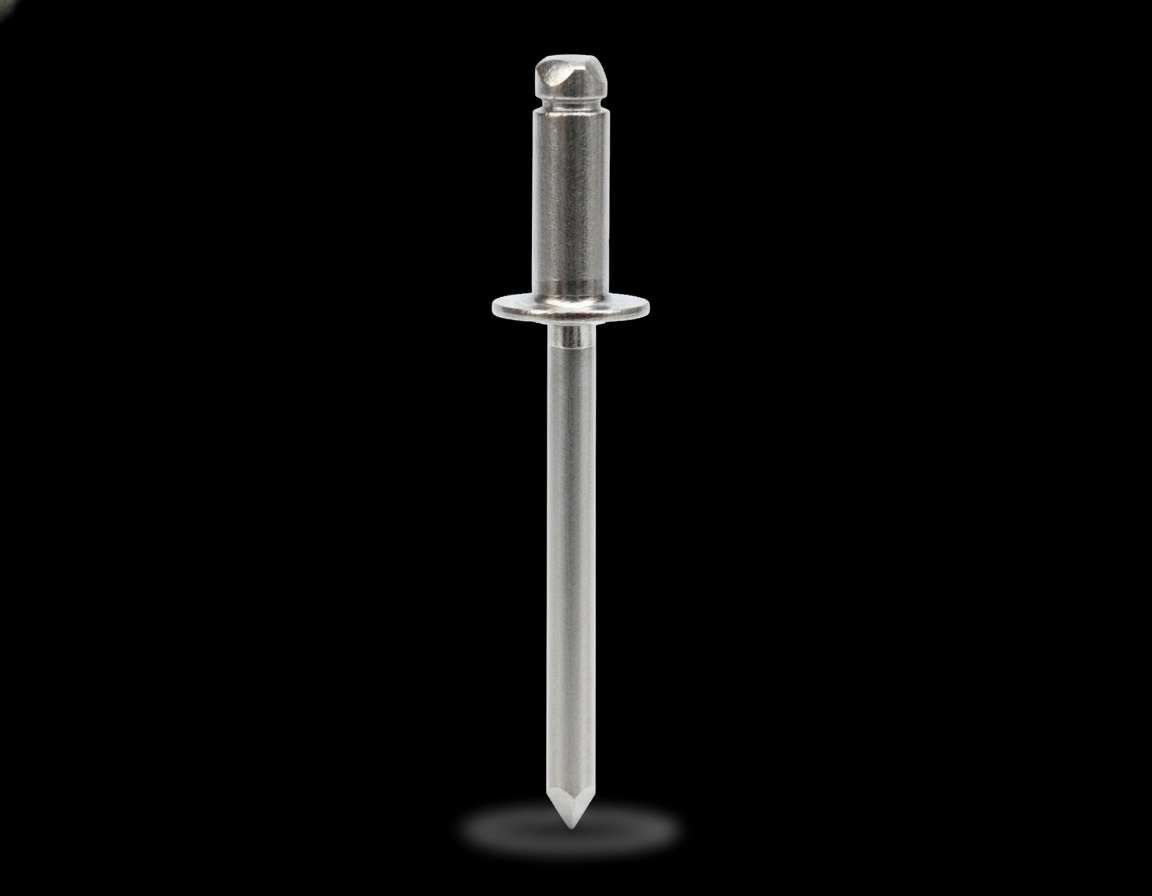
Aluminum Body/Steel Mandrel
ISO 15977 / DIN 7337| mm | 4 | 5 | 6 | 8 | 10 | 12 | 14 | 16 | 18 | 20 | 25 | 30 |
|---|---|---|---|---|---|---|---|---|---|---|---|---|
| Ø2.4 | — | — | — | — | — | — | ||||||
| Ø3.2 | — | — | — | |||||||||
| Ø4 | — | — | — | |||||||||
| Ø4.8 | — | — | ||||||||||
| Ø6.4 | — | — | — | — |
Selected: Aluminum Body/Steel Mandrel · choose a size from the chart
Available in Aluminum Body/Steel Mandrel, Steel/Steel, Stainless Steel/SS and Copper/Steel. Standard sizes (ISO 15977 / DIN 7337): Ø2.4 (4-12mm), Ø3.2 (5-20mm), Ø4 (6-25mm), Ø4.8 (6-30mm), Ø6.4 (10-30mm). Request a quote for your exact requirement.
Blind / POP Rivets are one-side installation fasteners that create a strong mechanical lock using a rivet gun. Their expanding body securely clamps materials even when the backside is inaccessible. Perfect for sheet-metal joining and fabrication, they offer durability, stability, and a clean, permanent fastening solution. Also commonly known as Pop Rivet or POP Rivet in the trade.
About Blind Rivet
Blind rivets are tubular rivets with a mandrel through the centre that can be installed from one side of the work. They are also called pop rivets or break stem rivets. The standards are ISO 15977 (aluminium body, steel mandrel), ISO 15983 (stainless steel body and mandrel) and DIN 7337. The rivet is placed in a drilled hole and a rivet gun pulls the mandrel. The mandrel head expands the rivet body on the far side, clamping the sheets together. The mandrel then breaks off at a set load. Common diameters are 2.4, 3.2, 4.0, 4.8 and 6.4 mm. Dome head rivets are standard; countersunk heads give a flush finish, and large flange heads suit soft materials. Closed-end rivets give a watertight joint.
Applications
- •Sheet metal enclosures and cabinets
- •HVAC ducting and air handling units
- •Automotive and bus body panels
- •Aluminium signage and cladding
- •Electrical panels and cable trays
- •Joints with access from one side only
- •Appliance and white goods assembly
Specifications
- Materials
- Aluminium / Steel Mandrel, Steel / Steel, Stainless Steel / Stainless Steel, Copper / Steel
- Size range
- Diameters 2.4 mm to 6.4 mm, grip ranges 1 mm to 25 mm
- Standards
- ISO 15977, ISO 15983, DIN 7337
Industries served
- Sheet metal fabrication
- HVAC
- Automotive and bus body building
- Electrical
- Signage
- Appliances
Related categories
Blind Rivet: frequently asked questions
What drill size should I use for a pop rivet?
Drill the hole about 0.1 mm larger than the rivet diameter. Use a 3.3 mm drill for a 3.2 mm rivet, 4.1 mm for a 4.0 mm rivet and 4.9 mm for a 4.8 mm rivet. A hole that is too large reduces the strength of the joint.
How do I choose the right length of blind rivet?
Choose a rivet whose grip range covers the total thickness of the materials being joined. As a rough guide, rivet length is the total thickness plus about 1.5 times the rivet diameter. Too short a rivet will not form a proper head; too long a rivet will not clamp tightly.
Can I use aluminium rivets on stainless steel sheet?
No. Aluminium rivets in stainless steel cause galvanic corrosion, especially outdoors, and the rivet will corrode first. Use stainless steel rivets (ISO 15983) for stainless steel sheet. Match the rivet material to the sheet wherever possible.
What is the difference between open-end and closed-end blind rivets?
An open-end rivet has a hollow body after setting, so water and air can pass through. A closed-end (sealed) rivet has a sealed body that keeps the mandrel head inside. Use closed-end rivets on tanks, ducts and outdoor panels that must be watertight.
Are blind rivets as strong as bolts?
No. Blind rivets are designed for sheet metal joints and light to medium loads. A 4.8 mm aluminium rivet has a shear strength of roughly 1 to 1.5 kN, while steel and stainless rivets are stronger. For structural or high-load joints, use bolts or structural blind fasteners.
Can pop rivets be removed?
Yes. Drill out the head with a drill the same size as the rivet hole, then push the rest of the rivet body through. Blind rivets are permanent fasteners, so removal destroys the rivet.