Socket CSK Screw (Allen Countersunk Screw)
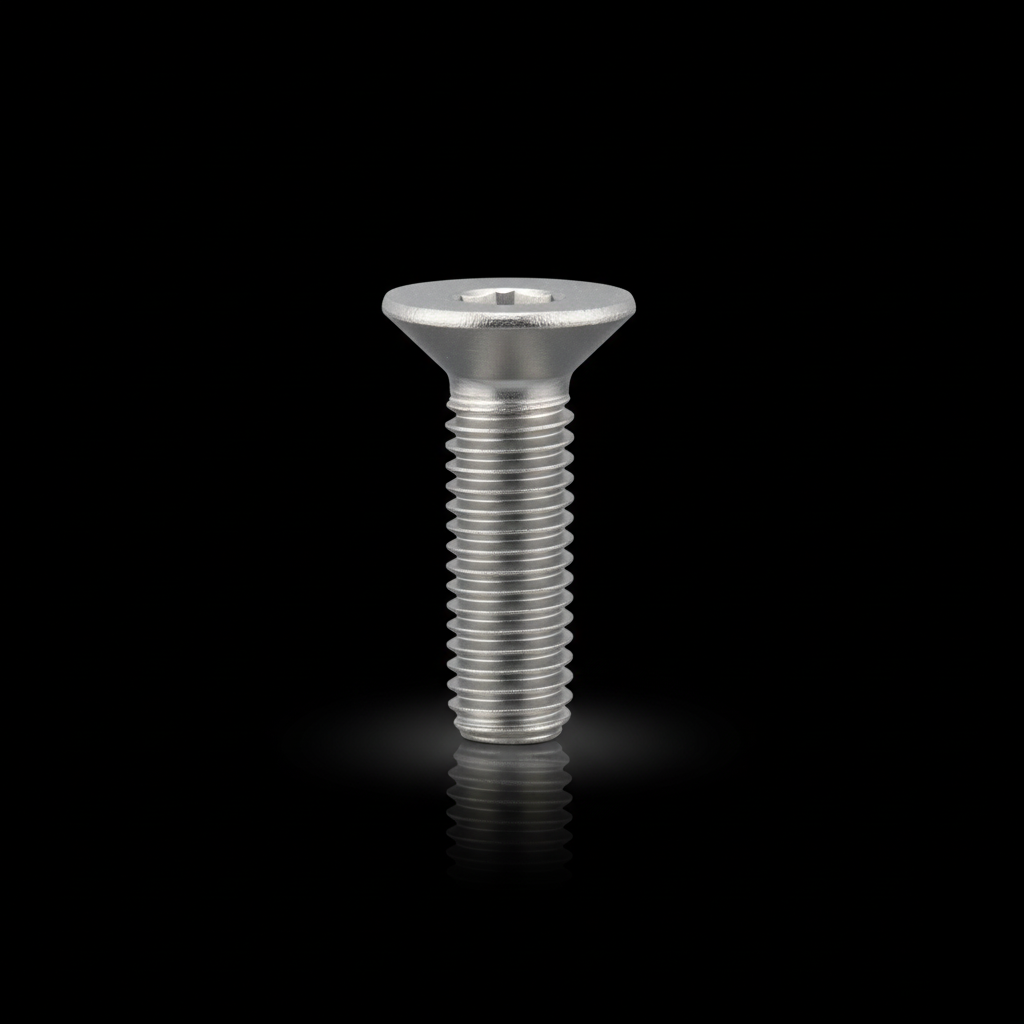
Stainless Steel 202
DIN 7991 / ISO 10642| mm | 6 | 8 | 10 | 12 | 16 | 20 | 25 | 30 | 35 | 40 | 45 | 50 | 55 | 60 | 65 | 70 | 80 | 90 | 100 |
|---|---|---|---|---|---|---|---|---|---|---|---|---|---|---|---|---|---|---|---|
| M3 | — | — | — | — | — | — | — | — | — | — | — | ||||||||
| M4 | — | — | — | — | — | — | — | — | — | — | |||||||||
| M5 | — | — | — | — | — | — | — | — | |||||||||||
| M6 | — | — | — | — | — | — | |||||||||||||
| M8 | — | — | — | — | |||||||||||||||
| M10 | — | — | — | ||||||||||||||||
| M12 | — | — | — | — | |||||||||||||||
| M16 | — | — | — | — | — | — | |||||||||||||
| M20 | — | — | — | — | — | — | — | — |
Selected: Stainless Steel 202 · choose a size from the chart
Available in Stainless Steel 202, Stainless Steel 304 / A2-70, Stainless Steel 316 / A4-70, Mild Steel, Brass, Nylon and Black Oxide. Standard sizes (DIN 7991 / ISO 10642): M3 (6-30mm), M4 (8-40mm), M5 (8-50mm), M6 (8-60mm), M8 (10-80mm), M10 (12-100mm), M12 (16-100mm), M16 (25-100mm), M20 (35-100mm). Request a quote for your exact requirement.
An Allen CSK (Countersunk) Screw features a flat, conical head designed to sit flush with the surface once installed, providing a clean and streamlined finish. With its internal hex drive, it ensures precise tightening and is widely used in machinery, panels, and assemblies that require smooth, obstruction-free surfaces. Also commonly known as Allen Countersunk Screw or Flat Head Allen Bolt in the trade.
About Socket CSK Screw
Socket countersunk screws are hex socket screws with a 90-degree conical head that sits flush with the surface. They are also called Allen CSK screws, flat head Allen bolts or countersunk socket screws. The standards are DIN 7991 and ISO 10642. The head fits into a 90-degree countersunk hole, so nothing projects above the part. This makes them the standard choice for sliding surfaces, mating faces and tooling plates. The overall length of a countersunk screw is measured including the head. The countersink also centres the screw, so the hole position controls the part position. Socket countersunk screws are made in alloy steel classes 8.8, 10.9 and 12.9 and in stainless steel A2-70 and A4-70. Their hex socket is smaller than on a socket head cap screw of the same size.
Applications
- •Tooling plates, jigs and fixtures with flat top faces
- •Slideways and guide rails on machine tools
- •Hinges and door hardware
- •Aluminium profile and panel assembly
- •Moulds and dies where heads must not project
- •Conveyor wear strips and guide plates
Specifications
- Materials
- SS 202, SS 304 (A2-70), SS 316 (A4-70), Mild Steel, Black Oxide Alloy Steel, Brass, Nylon
- Size range
- M3 to M20 metric coarse thread, lengths 8 mm to 100 mm
- Standards
- DIN 7991, ISO 10642
Industries served
- Machine tools
- Die and mould making
- Industrial automation
- Material handling
- Furniture and fit-out
Socket CSK Screw: frequently asked questions
How is the length of a countersunk Allen screw measured?
The length of a countersunk screw is measured from the top of the head to the end of the thread. This is because the whole head sits inside the part. A socket head cap screw, by contrast, is measured from under the head.
What countersink angle do DIN 7991 screws need?
DIN 7991 and ISO 10642 screws have a 90-degree head. The hole needs a 90-degree countersink. Using an 82-degree countersink (an inch standard) makes the screw bear only on the edge of the head and can crack it.
What hex key fits a DIN 7991 countersunk screw?
DIN 7991 screws use M3 = 2 mm, M4 = 2.5 mm, M5 = 3 mm, M6 = 4 mm, M8 = 5 mm, M10 = 6 mm, M12 = 8 mm and M16 = 10 mm hex keys. These are one size smaller than DIN 912 socket head cap screws of the same thread.
Can a countersunk socket screw take the same torque as a socket head cap screw?
No. The smaller socket and conical head mean a countersunk screw should be tightened to roughly 70 to 80 percent of the torque used for a DIN 912 screw of the same size and grade. Over-tightening can strip the socket or pull the head into soft material.
What is the difference between DIN 7991 and ISO 10642?
Both standards describe metric hex socket countersunk screws with a 90-degree head. ISO 10642 is the current international standard and has a slightly different head diameter tolerance. Screws to either standard fit a standard 90-degree countersink and use the same hex key.