Nyloc Nut (Nylon Insert Lock Nut)
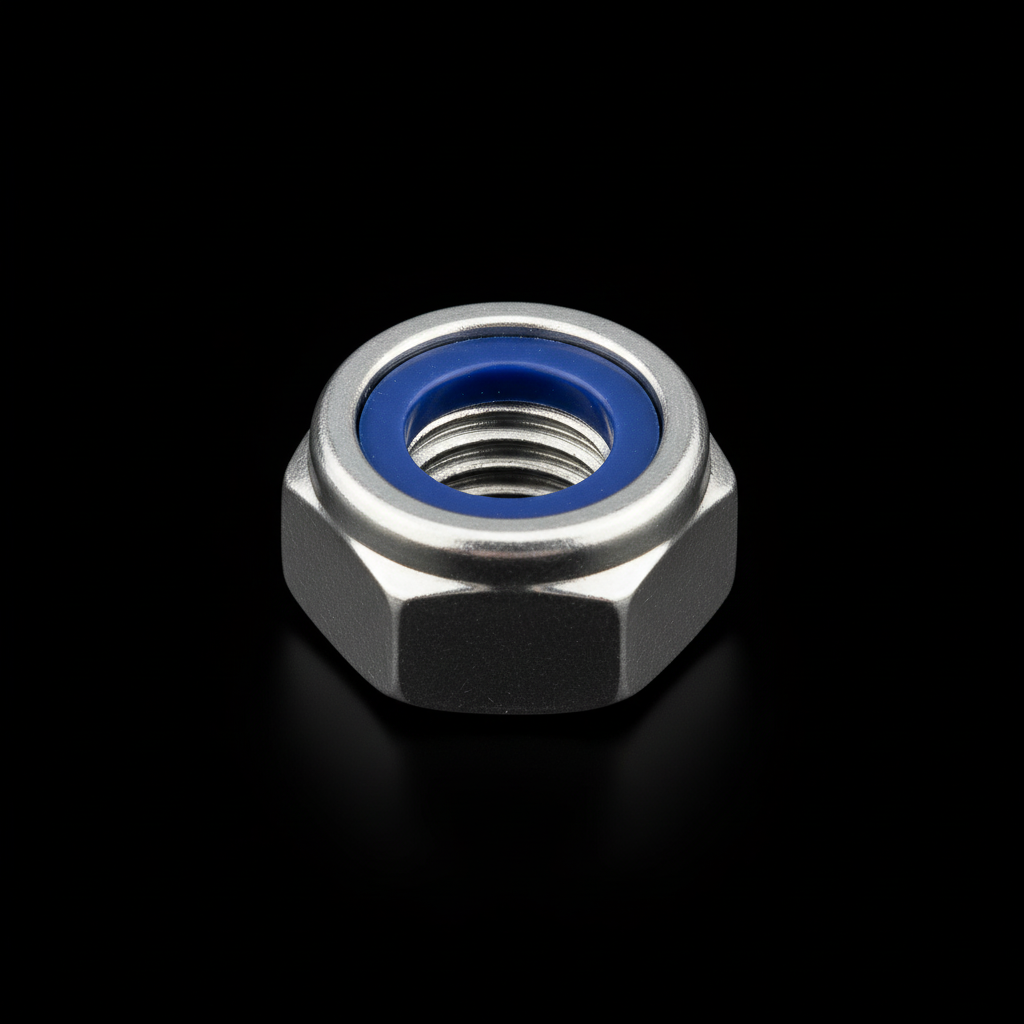
Stainless Steel 304 / A2-70
DIN 985 / ISO 10511| Size | M3 | M4 | M5 | M6 | M8 | M10 | M12 | M14 | M16 | M18 | M20 | M22 | M24 | M27 | M30 | M36 |
|---|---|---|---|---|---|---|---|---|---|---|---|---|---|---|---|---|
| DIN 985 |
Selected: Stainless Steel 304 / A2-70 · choose a size from the chart
Available in Stainless Steel 304 / A2-70, Stainless Steel 316 / A4-70, Mild Steel and Zinc Plated. Standard sizes (DIN 985 / ISO 10511): M3, M4, M5, M6, M8, M10, M12, M14, M16, M18, M20, M22, M24, M27, M30, M36. Request a quote for your exact requirement.
Nyloc Nuts contain a nylon insert that grips bolt threads to resist loosening from vibration. They offer reliable self-locking action suitable for many industries, balancing ease of use with dependable locking performance for both light- and heavy-duty assemblies. Also commonly known as Nylon Insert Lock Nut or Nylock Nut in the trade.
About Nyloc Nut
Nyloc nuts are hex nuts with a nylon ring inserted in the top that grips the bolt thread and resists loosening. They are also called nylon insert lock nuts, nylock nuts or self-locking nuts. The common standards are DIN 985 (thin type), DIN 982 (high type), ISO 7040 and ISO 10511. The nylon insert has a smaller inner diameter than the thread. When the bolt passes through, the bolt thread forms a mating thread in the nylon. This creates friction, called prevailing torque, which keeps the nut in place under vibration even without full clamp load. The nylon insert is usually polyamide 6.6 and is suitable up to about 120 °C. Nyloc nuts are made in steel classes 6, 8 and 10 and in stainless steel A2 and A4.
Applications
- •Vibrating machinery and motor mounts
- •Automotive suspension and linkages
- •Pivot points and rotating parts that must not be clamped tight
- •Agricultural equipment
- •Appliances and HVAC units
- •Electrical panels and cable trays
Specifications
- Materials
- SS 304 (A2), SS 316 (A4), Mild Steel, Zinc Plated Steel
- Size range
- M3 to M24 metric coarse thread
- Standards
- DIN 985, DIN 982, ISO 7040, ISO 10511
Industries served
- Automotive
- Industrial machinery
- Agriculture
- HVAC
- Electrical
Related categories
Nyloc Nut: frequently asked questions
Can nyloc nuts be reused?
Nyloc nuts can be reused a limited number of times, but the locking torque falls with each use. For safety-critical joints, fit a new nyloc nut every time. If a used nut can be spun on by hand, it no longer locks and must be replaced.
What temperature can nyloc nuts withstand?
Standard nyloc nuts with a polyamide 6.6 insert are rated up to about 120 °C. Above this the nylon softens and loses grip. For exhaust, engine and furnace applications, use an all-metal lock nut instead.
What is the difference between DIN 985 and DIN 982 nyloc nuts?
DIN 985 nyloc nuts are the thin type, with the metal body about as tall as a thin jam nut. DIN 982 nyloc nuts are the high type, with a full-height metal body. DIN 982 carries higher loads; DIN 985 is used where space is limited and loads are moderate.
How many threads should show past a nyloc nut?
At least one to two full threads of the bolt should project beyond the nylon insert. This makes sure the insert is fully engaged and the locking torque is developed.
Is a nyloc nut better than a spring washer for vibration?
Yes, for most joints. Transverse vibration tests (Junker test, DIN 65151) show that nyloc nuts resist loosening better than split spring washers. A spring washer gives little benefit once the joint is fully tightened.