Spring Dowel Pin
Spring Steel
DIN 1481 / ISO 8752| mm | 4 | 5 | 6 | 8 | 10 | 12 | 14 | 16 | 18 | 20 | 22 | 24 | 26 | 28 | 30 | 32 | 35 | 40 | 45 | 50 | 55 | 60 | 70 | 80 | 90 | 100 | 120 | 140 | 160 | 180 | 200 |
|---|---|---|---|---|---|---|---|---|---|---|---|---|---|---|---|---|---|---|---|---|---|---|---|---|---|---|---|---|---|---|---|
| Ø1 | — | — | — | — | — | — | — | — | — | — | — | — | — | — | — | — | — | — | — | — | — | ||||||||||
| Ø1.5 | — | — | — | — | — | — | — | — | — | — | — | — | — | — | — | — | — | — | — | — | — | ||||||||||
| Ø2 | — | — | — | — | — | — | — | — | — | — | — | — | — | — | — | — | |||||||||||||||
| Ø2.5 | — | — | — | — | — | — | — | — | — | — | — | — | — | — | — | — | |||||||||||||||
| Ø3 | — | — | — | — | — | — | — | — | — | — | — | — | — | ||||||||||||||||||
| Ø4 | — | — | — | — | — | — | — | — | — | — | — | ||||||||||||||||||||
| Ø5 | — | — | — | — | — | — | — | — | |||||||||||||||||||||||
| Ø6 | — | — | — | — | — | — | — | — | — | ||||||||||||||||||||||
| Ø8 | — | — | — | — | — | — | — | — | |||||||||||||||||||||||
| Ø10 | — | — | — | — | — | — | |||||||||||||||||||||||||
| Ø12 | — | — | — | — | — | ||||||||||||||||||||||||||
| Ø16 | — | — | — | — | |||||||||||||||||||||||||||
| Ø20 | — | — | — | — |
Selected: Spring Steel · choose a size from the chart
Available in Spring Steel, Stainless Steel 301 and Beryllium Copper. Standard sizes (DIN 1481 / ISO 8752): Ø1 (4-20mm), Ø1.5 (4-20mm), Ø2 (4-30mm), Ø2.5 (4-30mm), Ø3 (4-40mm), Ø4 (4-50mm), Ø5 (5-80mm), Ø6 (10-100mm), Ø8 (10-120mm), Ø10 (10-160mm), Ø12 (10-180mm), Ø16 (10-200mm), Ø20 (10-200mm). Request a quote for your exact requirement.
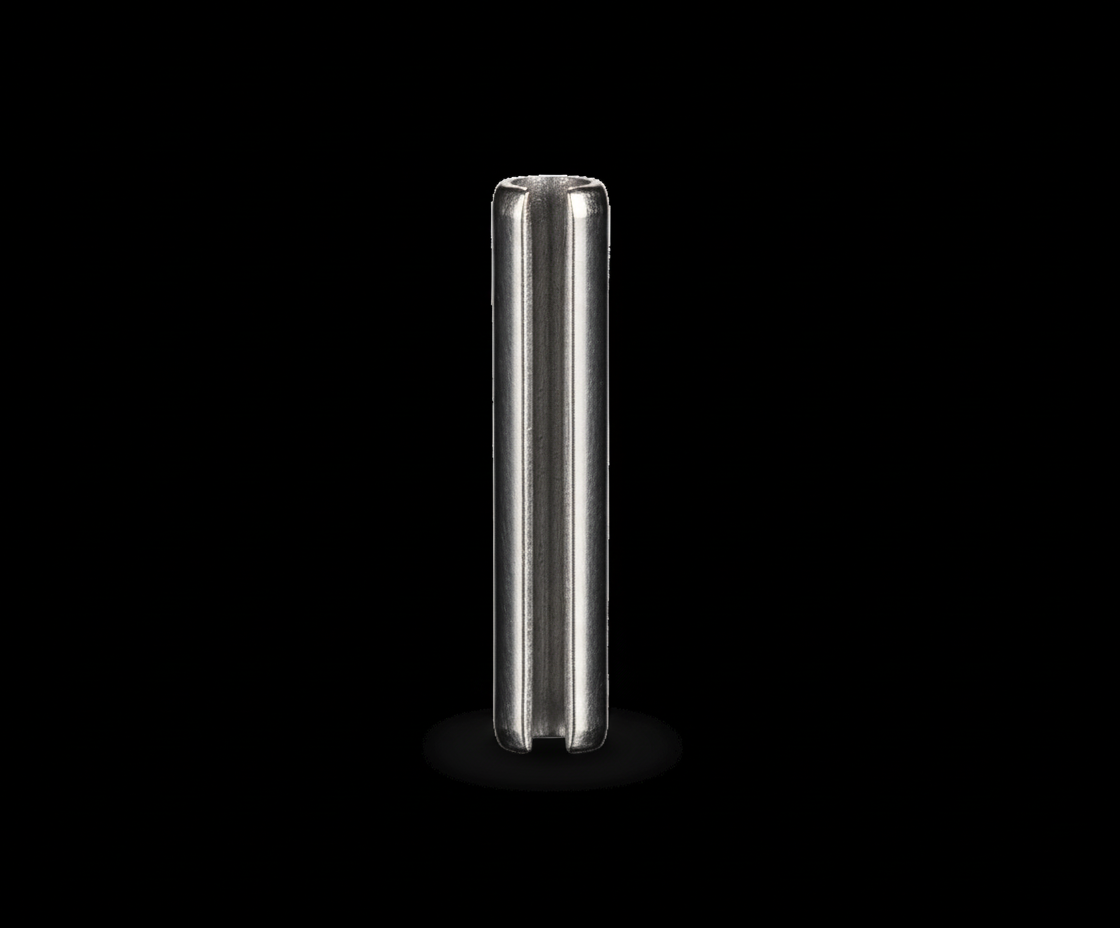
Spring Dowel Pins, also known as slotted spring pins, are hollow cylindrical pins with a slit that allows compression during installation. This creates strong outward tension, ensuring secure retention even under vibration or dynamic loads. Perfect for mechanical assemblies, machinery, and automotive use, they offer flexibility, durability, and dependable alignment.
About Spring Dowel Pin
Spring dowel pins are hollow, slotted pins made from spring steel that compress when driven into a hole and hold by spring pressure. They are also called spring pins, slotted spring pins, roll pins or tension pins. The standards are ISO 8752 and DIN 1481 for heavy-duty pins, and ISO 13337 for light-duty pins. Before fitting, the pin is slightly larger than its nominal diameter. When driven into a hole, the slot closes and the pin presses outward against the hole wall. This holds the pin firmly without reaming, so the hole can be a standard drilled hole. The nominal size of a spring pin is the hole diameter. Steel spring pins are hardened to about 420 to 560 HV. Stainless steel spring pins are used in wet or corrosive conditions.
Applications
- •Pinning gears, collars and pulleys to shafts
- •Hinge pins and pivots
- •Locating parts in drilled holes without reaming
- •Handles, levers and knobs
- •Agricultural and automotive linkages
- •Power tools and appliances
Specifications
- Materials
- Spring Steel, Stainless Steel 301, Beryllium Copper
- Size range
- Diameters 1 mm to 16 mm, lengths 4 mm to 100 mm
- Standards
- ISO 8752 / DIN 1481 (heavy duty), ISO 13337 (light duty)
Industries served
- Automotive
- Agricultural machinery
- Industrial machinery
- Power tools
- Appliances
Related categories
Spring Dowel Pin: frequently asked questions
What hole size do I need for a spring pin?
Drill the hole to the nominal size of the spring pin. A 5 mm spring pin goes into a 5 mm hole, with an H12 tolerance being sufficient. The pin is slightly oversize before fitting and compresses as it is driven in.
What is the difference between a spring pin and a solid dowel pin?
A spring pin is hollow and slotted and holds by spring pressure in a drilled hole. A solid dowel pin is precision ground and needs a reamed hole. Use a spring pin for retention and simple location, and a solid dowel pin for precise alignment.
What is the difference between heavy-duty and light-duty spring pins?
Heavy-duty spring pins (ISO 8752, DIN 1481) have a thicker wall and higher shear strength. Light-duty spring pins (ISO 13337) have a thinner wall and are easier to drive into softer materials. In a given hole size, a heavy-duty pin carries roughly twice the shear load.
Which way should the slot of a spring pin face?
Position the slot away from the direction of load where possible, usually at 90 degrees to the shear force. A load applied directly against the slot can close it and reduce holding.
Can a spring pin be removed and reused?
A spring pin can be driven out with a pin punch of the correct diameter. It can often be refitted, but a pin that has deformed or lost tension should be replaced.