Wing Nut (Butterfly Nut)
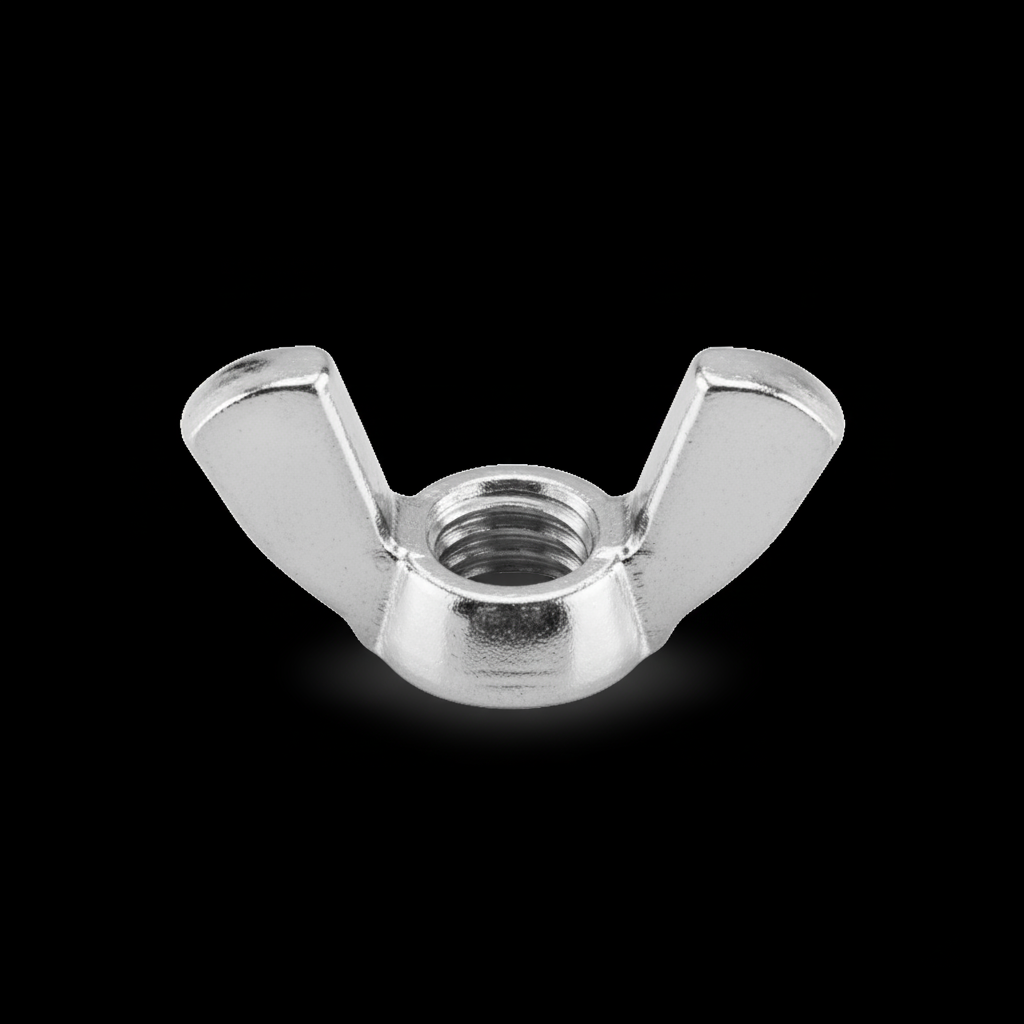
Stainless Steel 304 / A2-70
DIN 315| Size | M3 | M4 | M5 | M6 | M8 | M10 | M12 | M16 | M20 | M24 |
|---|---|---|---|---|---|---|---|---|---|---|
| DIN 315 |
Selected: Stainless Steel 304 / A2-70 · choose a size from the chart
Available in Stainless Steel 304 / A2-70, Mild Steel, Brass and Zinc Plated. Standard sizes (DIN 315): M3, M4, M5, M6, M8, M10, M12, M16, M20, M24. Request a quote for your exact requirement.
A Wing Nut is a hand-tightened fastener featuring two wing-like projections that allow quick installation and removal without tools. Its ergonomic shape offers strong grip and effortless adjustment, making it ideal for applications requiring frequent assembly, disassembly, or position changes. Lightweight, versatile, and easy to use, wing nuts are commonly found in light-duty mechanical, household, and DIY applications. Also commonly known as Butterfly Nut or Thumb Nut in the trade.
About Wing Nut
Wing nuts are internally threaded nuts with two flat wings that let them be tightened and loosened by hand without tools. They are also called butterfly nuts or thumb nuts. The common standard is DIN 315, which covers wing nuts with rounded wings. Wing nuts are used where a joint is adjusted, opened or dismantled often, such as clamps, covers and fixtures. Because they are tightened by hand, they are suited to light clamp loads only. Hand tightening typically produces a small fraction of the preload a spanner gives on a hex nut of the same size. Wing nuts are made in zinc-plated mild steel, SS 304 and brass. Stainless steel wing nuts are used outdoors and in food equipment, and brass wing nuts on electrical terminals.
Applications
- •Clamps, jigs and quick-release fixtures
- •Access covers and inspection panels
- •Battery and electrical terminals
- •Camera, music and display stands
- •Formwork and scaffolding accessories
- •Folding furniture and tent fittings
Specifications
- Materials
- SS 304, Mild Steel, Zinc Plated Steel, Brass
- Size range
- M4 to M16 metric coarse thread
- Standards
- DIN 315
Industries served
- Industrial maintenance
- Electrical
- Furniture
- Construction
- Food processing equipment
Related categories
Wing Nut: frequently asked questions
Is a wing nut the same as a butterfly nut?
Yes. Wing nut, butterfly nut and thumb nut are trade names for the same part: a nut with two flat wings for hand tightening. The common metric standard is DIN 315.
How tight can a wing nut be tightened?
A wing nut is designed for hand tightening only. Using pliers or a spanner can bend or break the wings. For joints that need a defined clamp force, use a hex nut tightened with a torque spanner.
Will a wing nut loosen under vibration?
Yes, a wing nut can loosen under vibration because hand tightening gives low preload. Add a spring washer or star washer under the wing nut, or use a nyloc nut if the joint does not need to be opened by hand.
Which material should I choose for wing nuts?
Choose SS 304 wing nuts for outdoor use and food or pharma equipment. Choose brass wing nuts for electrical terminals and earthing. Zinc-plated mild steel wing nuts are the economical choice for indoor fixtures and general use.
What sizes of wing nuts are common?
Wing nuts are most commonly used in M5, M6, M8 and M10. Smaller sizes are used on instruments and stands, and M12 to M16 on clamps and formwork. The thread is metric coarse, matching standard bolts and threaded rods.